Followers

Showing posts with label Habiru. Show all posts

Friday, February 10, 2023

Correctly Identifying Biblical Populations


Alice C. Linsley

One of the challenges facing biblical anthropology is the accurate identification of biblical populations. This is difficult because a population may be called by more than one name in the Bible and in ancient texts.

In some texts the Horite Hebrew are referred to as Hurrians, Hivites, and Hittites. E.A. Speiser called attention to Hurrian/Horite personal names associated with Shechem and with locations whose inhabitants the Bible calls “Hivites”. Other examples of the interchange of the terms Hivite and Horite may be found by comparing the Masoretic Text and the Septuagint. The Septuagint reads "Horites" for the "Hivite" of the Masoretic Text in Genesis 34:2 and Joshua 9:7.

The Masoretic Text of Joshua 11:3 described the Hivites as being "under Hermon in the land of Mizpeh." However, the Septuagint reads "Hittites" in place of "Hivites". It is reasonable to assume that Hivite, Hittite, Hurrian, and Horite are closely related terms. It appears that Hebrew priests served the rulers of the peoples called Hittite, Hurrian, and Hivite.

The Hittites were related to the Horite Hebrew. They share a common ancestry traced through Heth/Het (Gen. 23). The Hittite "sons" of Heth were among the clans of Canaan (Gen. 10:15). They recognized Abraham as their kinsmen, addressing him as "a great prince among us" (Gen. 23:6). Esau married Hittite women, the daughters of Hittite rulers named Beeri and Elon (Gen. 26).
 
The clan of Het lived near Kirtiath-Arba, later called Hebron (Gen. 23:3,7), at the northern boundary of Abraham's territory. This was the location of Sarah's settlement. Here Abraham purchased a cave tomb for Sarah's burial.

In the many scholarly papers published about the Hurrians, we find these variants: Hurri, Hurrites, Horites, and Horim.


The Hebrew

The Hebrew are another population that requires careful investigation. The term "Hebrew" is derived from the ancient Akkadian word “abru”, meaning priest. However, variant spellings include Habiru, Hapiru, ‘Aperu, and ‘Apiru. The Harris papyrus speaks of the 'Apiru of Re at Heliopolis (biblical On/Iunu). The term “pirû” refers to a house, a shrine, or a temple. A temple was the mansion (hâît) or the house (pirû) of the god. Sargon is said to have been born of a virgin queen who was overshadowed by the High God while in the temple. His home city, Azu-pir-anu, was located on the banks of the Euphrates.

The Hebrew/Abrutu in India are called the "Abhiras" in Indian texts such as the Mahabharata and Purana. The word Abhira (अभीर) means “fearless”. The Abhiras are described as warriors, mercenaries, and bandits. Yet they are also recognized as highly skilled and the retainers of traditional wisdom.

The similarities between the Abhira and the Nilotic Hebrew are striking. Sri Rama's son's name was Kush. He expanded the territory of his kingdom westward of India. Nimrod the Kushite expanded his territory in Mesopotamia. Mesopotamia was the natural trade bridge between the Nile Valley and the Indus Valley. Indus seals with Harappan inscriptions have been found in Mesopotamia. Indus pottery and seals have been found along the sea routes between the Indian subcontinent and Mesopotamia. 

The Abhira of the Indus Valley and the Hebrew of the Nile Valley were cattle-herding populations who transported their cows on reed boats.

Tuesday, January 29, 2019

Abraham's Horite Hebrew Ancestors


This diagram shows how the Hebrew lines of Ham and Shem intermarried. Note also that Nimrod's wife named her first born son Asshur, after her father, indicating that she was his cousin bride. This is called the "cousin bride's naming prerogative."


Alice C. Linsley


Abraham is a pivotal figure in the Bible. He is the father of many peoples, the icon of faith, and a sent away son to whom God delivered a kingdom.The Bible designates Abraham a Hebrew, but clearly he was not the first.

"Hebrew" is the English form of an ancient word Habiru, or Hapiru, or 'Apiru. The words Habiru and 'Apiru are found in Akkadian cuneiform texts before Abraham's time. The corresponding word in the Egyptian is pr - house or temple; pr-nfr - good house or house of rejuvenation; pr pn - this house, and prw - houses (cf. Dravidian Opiru - Sun House, shrine, or temple; Ugaritic upr - house; an pero - house, royal granary in the Apatani language of Pradesh, India).

After Abraham's time, the Harris Papyrus speaks of the 'Apriu of Re at Heliopolis (biblical On). Jacob's son Joseph married into this Horite Hebrew line.

The number seven was a sacred number for the Habiru and there may be a connection to the Nilotic Luo word for seven, which is abiriyo. 

The Horite Hebrew of Nekhen offered salutations to the rising Sun at their Sun piru/house. The Arabic yakburu means “he is getting big” and with the intensive active prefix: yukabbiru which means "he is enlarging." The Arabic expresses a linguistic relationship between the house/temple and the rising Sun.

The anthropological evidence suggests that the Hebrew were caste of priests who served the archaic kingdom builders, like the Kushite ruler Nimrod (Gen. 10). They served in the royal temples and shrines, held strictly to moral codes similar to the Decalogue, maintained ritual purity, practiced circumcision, and animal sacrifice on stone altars.

The Hebrew priest lines intermarried (endogamy). This preserved their blood lines and guarded their secrets. They were skilled in astronomy, medicine, stone work, metal work, and funerary practices such as mummification.

Before Abraham's time, the Hebrew priests had dispersed in the service of kingdom builders. The data of Genesis 4-12 presents the dispersion of the early kingdom builders out of Africa. Nimrod, an ancestor of Abraham, is an example. Genesis 10 tells us that he was a Kushite kingdom builder. The religion observed in the territories of the Kushite rulers would have been the religion of their ancestors, their Horim. Most, if not all, the dispersed Kushite rulers had Horite Hebrew in their service. The Horite Hebrew were a very prestigious ruler-priest caste. Thus, it appears that the ancient Horim/Horites were the first missionaries of the Messianic Faith. This happens thousands of years after the Earth was already populated, just as Messiah's appearing comes thousands of years after the earliest Messianic expectation. Apparently, the Eternal One does not rush matters.

The High God is sometimes shown with horns and a solar halo in images found from the Nile to the Kushan territories and as far as Northwestern France and Ireland.

Among the biblical Horite Hebrew the archetype of Messiah was Horus or Enki, the son of God who was said to rise from the dead on the third day.

Among the Celts he was recast as Crom Dubh, and among the Serbs as Hromi Daba or Hrom Div. He was regarded as the "Giving God."

Etruscan image, 520 BC

At Nile shrines Horus appears as man with a falcon's head. His mother,Hathor, wears the long horns of the bull in the shape of a Y that cradles the Sun. This Y shape is a solar cradle indicating divine appointment. The Canaanite Y designates a Horite Hebrew ruler. Note that many names have the initial Y. Some examples include Yaqtan (Joktan), Yacob (Jacob), Yistzak (Isaac),Yosef (Joseph) Yetro (Jethro), Yishai (Jesse), and Yeshua (Joshua/Jesus). The Y was a solar cradle that indicated a Horite Hebrew ruler-priest in Canaan.

Sargon I is said to have been of a virgin queen who was overshadowed by the High God. He was born in an O-piru. His home city was called Azu-piranu, meaning "House of the God Anu" In Akkadian, the High God was called Anu  and his so was called Enki.

Here is a sign post pointing to the origins of Messianic expectation, concerning the divine appointment of a virgin who is to bring forth the "seed" of God (Gen. 3:15). We recall the angel Gabriel's reply to Mary's question, "How shall this be, seeing I know not a man?" The angel explained, "The Holy Ghost shall come upon thee, and the power of the Highest shall overshadow thee: therefore the Holy One which shall be born of thee shall be called the "Son of God." (Luke 1:34, 35)

The image of Hathor shows her overshadowed by the Sun. The Sun rests in the horns of a cow, a solar cradle (Y). An ancient Egyptian ritual involved placing a male baby before the image of Hathor and the priests placed gifts before the "divine son."


Hathor overshadowed


The cultural context of the Horite Hebrew in Canaan is Kushite. "Kushite" is a general term for people who lived in the region of Kush along the Nile between about 2000 BC and 500 BC. Before the time of the Kushites.


The Kushite king Menes was the first to unite the Upper and Lower Nile and the Kushite influence is seen on the earliest dynasties of Egypt.


Abraham's Horim

Abraham's ruler-priest ancestors are listed in Genesis 4, 5, 11 and 36. Apparently, they had a distinctive reddish (ruddy) skin tone. They are called Horites in Genesis 36 because they were devotees of Horus, who was regarded as the "son" of the Creator.

The oldest known center of Horite Hebrew worship is Nekhen (Hierakonpolis) on the Nile. Votive offerings at the Nekhen temple were ten times larger than the normal mace heads and bowls found elsewhere, suggesting that this was a very prestigious shrine. Horite priests placed invocations to Horus at the summit of the fortress as the sun rose. This is the origin of the morning ritual of devout Hindus (Agnihotra) and the Jewish Sun Blessing ritual (Birkat Hachama) that is performed every 28 years.

The Kushite peoples are descendants of Kush and Kush's sons Ramah and Nimrod. Kush is listed in Genesis 10 as one of Noah's grandsons. Kush was the father of Nimrod.

About 5200 years ago, Nimrod established a kingdom in the Tigris-Euphrates Valley. His name is of Nilotic origin, and he was a Kushite kingdom builder.The language of his kingdom was Akkadian and it shares roots with the languages of the biblical populations of the Nile, Arabia, Mesopotamia, and Anatolia.

Nimrod married a patrilineal cousin, the daughter of Asshur, and she named their first born son after her father. This is consistent with the marriage and ascendancy pattern of the Horite Hebrew rulers.

Here is an image of an ancient image of a priest from the Upper Nile. Priests were called "tera" and Abraham's father held this title (Gen. 11:24-28). 


Abraham's Annu ancestors knew the holy Name YHWH. Moses knew that Name because his father Amram was Horite Habiru and Moses' half-sister wife was Kushite.


Genesis 6 speaks of "the mighty men of old," the earliest kingdom builders who constructed cities, temples, and fortified high places. They controlled commerce on the major water systems of the ancient world. They migrated out of the Upper Nile Valley in different directions, and they were served by a prestigious caste of Horite Hebrew priests.


Migrations out of the Upper Nile traced genetically 


DNA evidence confirms the Kushite migration out of the Nile Valley. There were many migrations out of Africa. The first took place about 120,000 years ago and the second about 70,000 years ago. About 18,000 years ago the distinction between R1 and R1b was evident.

About 70% of men in Britain, Scotland and Ireland are in Haplogroup R1b.  The most recent expansion out of Africa is the Kushite expansion about 5500 years ago. This appears to have spread the Horite Hebrew religion and carried the Messianic expectation to distant lands.


Saturday, March 19, 2016

Where Ahmed Osman Goes Wrong


Alice C. Linsley

Ahmed Osman (Arabic: أحمد عثمان‎) is an Egyptian-born author and Egyptologist. Drawing on the Bible, the Qur'an, and ancient Egyptian texts, he has put forward theories about Moses and Jesus that are largely rejected by most scholars. His work has a following among the "quirky" which is discrediting to him as a scholar. Osman has much to offer, but he has ignored the anthropologically significant data of Genesis and Exodus. Though his ideas are interesting, many cannot be supported by the evidence of history, linguistics, anthropology, and molecular genetics.
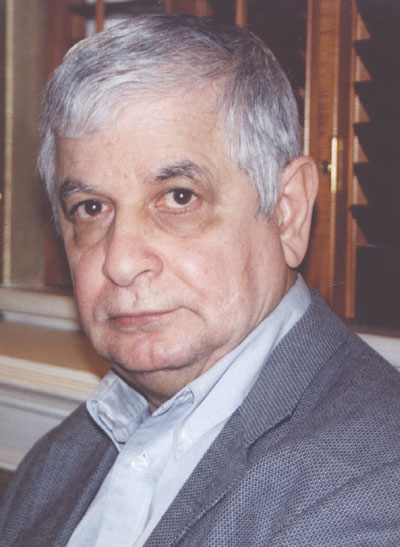
Osman_Ahmed-portrait
Ahmed Osman
In his book "Christianity: An Ancient Egyptian Religion" Osman posits that the roots of Christianity are found in ancient Egypt. He bases this conclusion, in part, on the variants of the name Jesus which include Yeshua, Joshua, Issa, Esau and Esse. Osman focuses on the variant Esse and attempts to connect Jesus and his followers to the Essenes, a Jewish ascetic sect of the 2nd century BC–2nd century AD who lived in structured communities in Palestine and held property in common. Certainly, the Essenes were influenced by theological ideas found in ancient Egypt.

Both the Essenes and the Pharisees held expectation of Messiah as a king who would restore the Davidic dynasty and restore Israel's former glory. This hope is expressed in Psalm 110:1: The Lord (YHWH) said to my Lord (L'adoni): "Sit at my right hand until I put your enemies under your feet. L'adoni is an address for a human master. The Essenes believed that master was David. Their view of Messiah was as a political agent who would fulfill their nationalistic and spiritual hopes. Probably this is why Jesus avoided using the word "Messiah" when speaking of himself. He told Pilate that his kingdom is not of this world. This world is passing away. His kingdom is eternal. "Your kingdom is an everlasting kingdom, and your dominion endures through all generations." Daniel 7:14 and Psalm 145:13

An eternal kingdom requires an immortal King. That is why Christians maintain that the bodily resurrection of Jesus is the ultimate proof of his identity as the long-awaited Son of God. Jesus' conception in the Virgin's womb by divine overshadowing is another proof of his identity. The angel explained to Mary: "The Holy Spirit will come on you, and the power of the Most High will overshadow you. So the holy one to be born will be called the Son of God."(Luke 1:35)

The oldest of these variants is likely Yeshua as it has the initial Y indicating divine appointment by overshadowing. This idea is found among Abraham's Proto-Saharan cattle-herding ancestors dating to at least 3500 BC. The Y depicted the long cattle horns that were worn as a solar crown. This Y mark appears in the names of many Horite Habiru/Hebrew rulers: Yaqtan (Joktan); Yishmael (Ishmael); Yishbak; Yitzak (Isaac); Yacob (Jacob); Yosef (Joseph); Yetro (Jethro); Yeshai (Jesse) and Yeshua (Joshua/Jesus).

However, the roots of Messianic expectation can be traced to one of the oldest known Horite temple at Nekhen (Sudan), a site of veneration of Horus that predates the first Egyptian dynasties. Discoveries at Nekhen continue to push back the dating of early civilizations. In May 2014, Dr. Mohamed Ibrahim announced the discovery of a Pre-Dynastic tomb at Nekhen (Hierakonpolis) that dates to about 500 years before King Narmer and the 1st Dynasty.

Nekhen is called the Falcon City as the falcon was one of the totems of Horus, the son of Ra. The Egyptian hr means "the one on high" and is a reference to the falcon that soars in the heavens. In the Coffin Texts, Horus claims, "I have brought the ways of eternity to the twilight of the morning.  I am unique in my flight." (Passage 148)

Nekhen was a large city with an estimated population of 20,000. It had markets, breweries and a large fishing industry. The city stretched nearly 3 miles along the Nile floodplain. Votive offerings at the Nekhen temple were ten times larger than the normal mace heads and bowls found elsewhere, suggesting that this was a very prestigious shrine. Horite priests placed invocations to Horus at the summit of the fortress as the sun rose.

The solar arc signified the rising of Horus from death to life. He rose as a lamb and set in mature strength as a ram. This conception is the background story of Abraham and Isaac on Mount Moriah. The expectation that the Righteous Son would not remain in the grave is expressed in Psalm 16:10: For thou wilt not leave my soul in hell; neither wilt thou suffer thine Holy One to see corruption.

Horus of Nekhen
Renée Friedman, who has direct knowledge of the excavations at Nekhen, has written that the "evidence of industrial production, temples, masks, mummies, and funerary architecture as early as 3500 B.C. is placing Nekhen at the forefront of traditions and practices that would come to typify Egyptian culture centuries later.


Osman on Moses, Monotheism, and the Ten Commandments

In his book The Hebrew Pharaohs of Egypt, Osman puts forth the theory that Moses and the Pharaoh Akhenaten are the same historical person. He writes that Moses “abandoned traditional Egyptian polytheism and introduced a monotheistic worship centered on the Aten… [and] erected his new temples open to the air facing eastward; in the same way as the orientation of the Heliopolis.”

Heliopolis is Biblical On (Iunu), an Annu shrine city. Osman does not seem to be aware of the Annu and their religious practices. Plato, who studied under a Horite priest of Heliopolis for thirteen years, wrote "Tell me of the God of On, which was, is and shall be." Heliopolis was the geodetic center of Egypt. The pyramid triads at Giza, Abusir and Saqqara were aligned to the obelisk at On. Baalbek (Heliopolis) in Lebanon also aligned to On.

Osman makes assumptions that should be questioned. He assumes that ancient Egyptian religion was polytheistic. However, the more we learn about the ancient Egyptians the more it appears that their religion is not a true example of polytheism. From pre-dynastic times there was only one Creator though he was identified by different names: YHWH, El, Amun, Amun-Re, Aten, Atum, Azu, Re, etc. This God has a son, Horus. The Father and the Son are inseparable and of one essence in the theology of Abraham's Horim. Horus knows the Father and the Father knows the Son. This is expressed in the Ancient Egyptian Pyramid Texts. In the priest's prayer to the King, he says, "Horus is a soul and he recognizes his father in you..." (Utterance 423)

While "gods" are mentioned in the Egyptian texts and in the Bible, both maintain that the One God is above all other gods. In the Ancient Egyptian Pyramid Texts this is explicit. In a prayer addressed to the Purified Horus of the East it is said, "For you are he who oversees the gods, There is no god who oversees you!" (Utterance 573)

Horus is the bread offered to mortals. Consider this from the Pyramid Texts, mortuary texts dating from the beginning of the 4th dynasty: "O Hunger, do not come for me; go to the Abyss, depart to the flood! I am satisfied, I am not hungry because of this kmhw-bread of Horus which I have eaten." (Utterance 338) The Egyptian word km means to bring to an end, to complete, or fulfill, and hw refers to the temple or mansion at the end of the water above. Genesis speaks of this: God made the vault [expanse above] and separated the water under the vault from the water above it (Genesis 1:7).

It appears that the "kmhw-bread of Horus" is what the Church Fathers call "the bread of immortality." Concerning himself, Jesus said that "unless you eat the flesh of the Son of Man and drink his blood, you have no life in you. Whoever feeds on my flesh and drinks my blood has eternal life, and I will raise him up on the last day" (John 6:53-54).

Osman assumes that Moses was a monotheist, which is incorrect. Moses and his Horite Habiru ancestors were henotheists, that is, they believed in one supreme uncreated Creator who is served by lesser created divine powers such as angels. Angelic or celestial beings were often portrayed as birds. Henotheism is much closer to monotheism than to polytheism.

The Creator's emblem was the Sun by which the Creator gives life to the world. The Sun was also called "Bull of bulls" because it inseminates the Earth. Consider this prayer from the Pyramid Texts: "Hail to you, Bull of bulls, when you arise!... As for my corpse, it is rejuvenated." (Utterance 336) This God has the power to give life to the dead.

The Creator overshadows those He appoints. Divine appointment applied to rulers and to the Woman (Gen. 3:15) who was to conceive the divine Seed or the Si-Re, "Son" of Re. Jesus refers to himself as the Seed in John 12:24. He tells his disciples that he is going to Jerusalem to die and when they object, he explains: "Truly, truly, I say to you, unless a grain of wheat falls into the earth and dies, it remains alone; but if it dies, it bears much fruit."

Osman notes that the Ten Commandments is clearly influenced by earlier Nilotic writings, such as Spell/Prayer 125 in the Egyptian Book of the Dead. He is correct in this. However, a much more significant influence is the Code of Ani which dates to about 2500 BC. There also is evidence of influence from the Law of Tehut which dates to about 3200 BC.

Portions of the Psalms are also found in earlier Nilotic writings. This should not surprise us since Abraham's Habiru ancestors came from the Nile Valley. The prayers of ascension in the Pyramid Texts and the Psalms of Ascent have much in common.

There are many parallels between the Psalms and the ancient Egyptian Coffin Texts, a collection of funerary prayers written on coffins beginning in the First Intermediate Period. Consider this poetic depiction of the soaring Horus from the Coffin Texts (Passage 148):
"I am Horus, the great Falcon upon the ramparts of the house of him of the hidden name. My flight has reached the horizon. I have passed by the gods of Nut. I have gone further than the gods of old. Even the most ancient bird could not equal my very first flight. I have removed my place beyond the powers of Set, the foe of my father Osiris. No other god could do what I have done. I have brought the ways of eternity to the twilight of the morning. I am unique in my flight. My wrath will be turned against the enemy of my father Osiris and I will put him beneath my feet in my name of 'Red Cloak'." 

Here we find a Messianic reference that appears in Psalm 110: The Lord says to my Lord: "Sit at My right hand until I make Your enemies a footstool for Your feet."


Biblical References to Horus and the Horites

Horus and the Horites are referenced throughout the Bible. The Horite rulers of Edom are listed in Genesis 36. Among them are Seir, Esau the Elder, Esau the Younger, Zibeon, Ezer, and Uz.

Biblical persons with Horus names include Hur, Moses's brother-in-law, and Aaron, Moses's brother. Aaron in Arabic is Harun.

In 1 Chronicles 7:36 we find the Horus name Har-nepher: "The sons of Zophah: Suah, Harnepher, Shual, Beri, Imrah..." Har-nepher (HR-ntr/ntjr) means Horus is King/God. The Virgin Mary's name reveals her Horite ancestry. She is Miriam Daughter of Joachim Son of P-ntjr Priests of Nathan of Bethlehem. From predynastic times, ntjr designated the king. It is likely that p-ntjr means "King's priest" or is a reference to a member of the Horite ruler-priest caste.

Joseph's family lived in Nazareth, the home of the eighteenth division of priests. This division was called "Happizzez" (1 Chronicles 24:15). The word happi is of Egyptian origin and designates the Nile River.

I Chronicles 4:4 names Hur/Hor as a "father" of Bethlehem, and 1 Chronicles 2:54 names Salmon, the husband of Rahab of Jericho, is called a "father" of Bethlehem. Mount Hor (Numbers 20:22-29) is near Petra in Edom. Edom was Horite territory.


Thursday, February 18, 2016

Archaic Rulers, Ascendancy, and the Foreshadowing of Christ


Over the past few days I have been having a conversation at VirtueOnline with two friends. The conversation began with comments about the 10th century Aleppo Codex, the oldest surviving copy of the Hebrew Bible, now recognized as an UNESCO world treasure.

As is evident from reading the comments (reproduced below), the conversation strayed into matters of greater antiquity. Bruce and Rodd have graciously given me permission to reproduce their comments at Just Genesis.


Alice C. Linsley 

That information about the Aleppo Codex is very interesting, but this is not very old. Today we have so much information about the people who gave us the oldest material in the Bible. They spoke neither Hebrew nor Greek. Their scripts suggest signs of great antiquity that have been found rather widely: Africa, Palestine, Central Europe, ancient Bactria. etc.


Bruce Atkinson

That was my own take: 10th century is old for an almost complete codex, but we are talking about almost a thousand years into the Christian era. Not too helpful regarding scholarly understanding of the true originals. There are many much older partial manuscripts. Even the Greek Septuagint version of the OT used by the early Christians is far, far older. One must wonder how much editing occurred during the previous 900 years as a result of the rise of Christianity (which led to minimizing the Messianic prophecies that pointed to Jesus)? As a Jewish relic, it has much value, but not for gaining knowledge of the earliest Hebrew/Aramaic manuscripts.


Alice C. Linsley

Indeed, the question of redaction is intriguing. The Septuagint says that Eliezer, son (dam) of Masek (not "Damascus") was one of Abraham's sons. This does not appear in the later Hebrew (Masoretic) texts. There is also a discrepancy in the numbers assigned to the archaic rulers in Genesis 4 and 5. Lamech the Younger is assigned 753 years in the Septuagint and 777 years in the Masoretic.


Bruce Atkinson

Fortunately, there are not too many of these differences and the ones that exist do not compromise essential doctrines. My own view is that God especially helped the Septuagint translators because (of course) He knew that this Greek translation would be the one that the first Christians (including Jesus) would use. Hebrew was already a dead language (like NT Greek and Latin is today) and Greek schools had existed in Palestine for over a hundred years. Although they spoke a pidgin Aramaic in their daily life, educated Jews in the first century knew Greek as well, so the Septuagint was their everyday Bible.

It is also interesting how many of the Christian translators and theologians later switched to the Masoretic (Hebrew) texts, even though the OT quotes in the NT are almost all taken from the Septuagint. I think this switch was a mistake.

Artistree (Rodd)

Bruce I agree; it was definitely a mistake to switch from the Septuagint to the Masoretic text. In the book, "When God Spoke Greek: The Septuagint and the Making of the Christian Bible" (Oxford University Press), author Timothy Michael Law goes into great detail about how Jerome went about making the switch when he translated his Latin Vulgate from the proto-masoretic text instead of from the Church's Bible at the time, the Septuagint. When it can be shown how he, by his own decision alone, went about making this switch (by dishonesty and underhanded tactics), one is amazed at how the Roman Catholic Church could consider this very arrogant and dishonest man a "Saint". True, Jerome was brilliant, but he was no "saint", in my book.

Alice C. Linsley

Jerome's grasp of ancient Semitic roots is astonishing. He was one of the most learned men of Christian antiquity. A classically trained scholar, he became a monk and resided in Bethlehem. His insights into Genesis are remarkable. For example, Jerome, notes: "I am reviewing carefully the places in Scripture where I might find old age mentioned for the first time. Adam lived for 930 years, yet he is not called an old man. Methuselah's life was 969 years, and he is not called an old man. I am coming down all the way to the flood, and after the flood for almost three thousand years, and I find no one who has been called old. Abraham is the first, and certainly he was much younger than Methuselah." (Homilies on the Psalms 21)

Jerome's observation is significant. Abraham was old. Those who lived before the flood are not called "old" because the numbers assigned to them are symbolic.

In the Vulgate, St. Jerome rendered Genesis 3:15: Inimicitias ponam inter te et mulierem, et semen tuum et semen illius: ipsa conteret caput tuum, et tu insidiaberis calcaneo eius.

I will put enmities between you and the woman, between your offspring and her offspring. She will crush your head, and you will lie in wait for her heel.”

Jerome noted that the Hebrew is ipsa which is a feminine pronoun. The appearance of the feminine pronoun in Genesis 3:15 led some to find an elevated role for Mary, as seen in images of Mary standing on the globe with the serpent under her feet. Of course, this image is found in the Latin tradition, but not among the Eastern churches. Still, Jerome is respected in the East as well as the West.

Here is an article on St. Jerome's excellent reflections on key ideas in Genesis.


Artistree

Hi, Alice. I have a question. I use English translations of the Septuagint as my primary study bibles but also use standard common English translations for comparison.

I've been looking at the various names in Jacob's family in Genesis 46. Genesis 46:27 in the Septuagint, after listing all the names, says, "Thus all the souls of Jacob's house who went to Egypt were seventy-five". Comparing that to the Masoretic (my RSV) which says, "....all the persons of the house of Jacob, that came into Egypt, were seventy."

Luke, in Acts 7:14, agrees with the Septuagint," And Joseph sent and called to him Jacob his father and all his kindred, seventy-five souls."

My question is this: When I count the names listed in either text, I do not come up with 75 names as in the Septuagint rendering, or 70 in the Masoretic rendering. Do you believe these numbers, 70 or 75, are symbolic, or am I counting wrong? Or is there another explanation?

Also, it appears that women are not included in the number of souls/persons who enter Egypt from Jacobs family....could you comment on that briefly? Why not list daughters?

Blessings,
Rodd


Alice C. Linsley

Rodd, you are wise to use both versions when studying the Bible. Discrepancies like this reveal different perspectives and a good understanding requires recognition of these perspectives. They are like facets on a diamond.

Daughters are rarely named in the king lists, but when they are we should pay close attention. These women are key to understanding the marriage and ascendancy pattern of the ancient Habiru/Hebrew. That is the case with Namaah, Anah and Oholibamah. Abraham's had nine sons and it is certain he had daughters also. The daughters of ruler-priests married the sons of ruler-priests (endogamy).

Numbers in the Bible are usually symbolic and reflect a context. For example, the number 40 - as in "40 days and 40 nights" - has a Nilotic context. The Nile flooded for 40 days and the people who had left their homes waited another 40 nights before returning home. It took "40 days and 40 nights" for the waters to recede. The number 40 does not appear in the book of Daniel because that has a Babylonian context in which other numbers hold more symbolic importance.

For the Masoretes (Temple scholars of the 6th–10th centuries AD) the number 7 was a sacred number as it was associated with their very ancient priesthood. This is evident in the priestly account of Noah's flood where Noah is told to take 7 sets of "clean" animals onto the ark. Contrast this with the older account in which he is told to take 1 set: male and female (Note the binary feature: male-female, which is a distinguishing trait of the older versions of the flood and the creation).

What I find most provocative about this discrepancy is the suggestion in the Masoretic text that not all the Habiru (Hebrew) went down to Egypt. This is certainly true since there were many Hebrew clans besides Jacob's at this time. Among them were the clans of Seir the Horite, Elon, Esau the Elder, and Uz.

Genesis 38 tells us that Judah, who had gone down to Egypt with his father, came back to Canaan where he had relations with Tamar. It appears that the ruling men of Jacob's clan continued to interact with kinsmen and business associates in Judah, Edom and Beersheba.

Artistree (Rodd)

Thank you, Alice. I appreciate your deep knowledge.

I try to utilize many perspectives in my studies also, besides the different text families. I do have a couple of study Bibles that give the JEDP Theory, including the Jewish Study Bible and New Interpreters Study Bible NRSV , and have spent a fair amount of time with Scholars such as Daniel L. Smith-Christopher. I've been very impressed, on the other hand, by Gary A. Rendsburg, professor of Jewish History at Rutgers University. He argues for a single author of Genesis and builds on the work of Umberto Cassuto ( Hebrew University, in the 1950s) and Michael Fishbane of Chicago University. The cyclical literary patterns in Genesis ( Primeval History, Abraham cycle, Jacob cycle, and the Joseph story) are very persuasive in the argument for a sole author. Rendsburg places the date of Genesis very late, in the period of the Davidic Court ( The Redaction of Genesis, 1986). Still other scholars such as those editors of the Ignatius Study Bible series argue for the primary authorship of Genesis being Moses ( with later editing), the later showing the chiasm/chiastic structure of Genesis but putting an earlier date on the work than Rendsburg. One can find diamonds in all of the various perspectives in Biblical studies.

Thanks again for all the useful nuggets of info!


Alice C. Linsley

Umberto Cassuto is one of my favorite commentators on Genesis. The JEDP has limited benefits, in my opinion, but is not altogether worthless. There is no doubt in my mind, however, that the final hand on the Genesis material is the Deuteronomist, and this is a revisionist voice.


Bruce Atkinson

Good questions, Artistree. Surely Alice has some better hypotheses than I. I have heard of the discrepancies (70 vs. 75 vs. ?). I just figured that they were a bit loose about such details in those days or some copier had a slip of the 'pen .' But who in 2016 really knows why?

And my off-the-top assumption about not counting daughters was merely part of the patriarchal tradition-- which was consistent with most other cultures of that time. But again, any answer we come up with today will be speculative.


Artistree

Actually, in some books there are not too many differences, but in other books there are substantial differences. For example, the Masoretic Book of Jeremiah is 20% longer than the Septuagint Book of Jeremiah...that is a lot of verses!

After the Dead Sea Scrolls, many scholars are now of the opinion that the "extra material" in the Masoretic Jeremiah was added later, and probably an addition to the original Hebrew text.

but I would agree, these differences do not change essential doctrines. Although, it is pretty clear that St. Paul used the Greek OT and drew his theology from it, and it would have been much more difficult for him to show that his thought was biblical had he been referencing the Hebrew text.


Bruce Atkinson

Agree. And thanks for the info, Rodd. I am enjoying reading your exchange with Alice.


Alice C. Linsley

Such differences are themselves very informative. The Septuagint is correct about Eliezer being a son of Abraham, and the Masoretic text presents the number that is consistent with the ancient Cain (7)-Lamech the Elder (77)-Lamech the Younger (777) narrative.


Artistree

Alice, Could you give me the verses in the Septuagint that confirms Eliezer being a son of Abraham ? I must have missed it as I've been going through Genesis again.


Alice C. Linsley

"O Lord God, what can You give me seeing that I shall die accursed, and the steward of my household is Dam-Mesek Eliezer?" (Gen. 15:2)

The Hebrew is challenging here as there is either an attempt at play on the sound ben meshek (Meseq)... with dam mesek. Or the two were intended as a parallel, since they mean the same thing: "one born to Masek."

It appears that Abraham had two concubines: Hagar and Masek. This was not unusual among the Habiru rulers. Consider Jacob's 2 concubines.

The reference to Masek as a "handmaid" is clearer in the Orthodox Study Bible, based on the Septuagint. Gen. 15:2 reads: "And Abraham said, 'Lord, what will You give me, seeing I go childless, and the heir of my house is Eliezer of Damascus, the son of Masek, my domestic maid servant." The "of Damascus" is probably a mistake, but the Orthodox Study Bible committee decided to leave the place name.


Artistree

Thank you again, Alice. I did read that verse last night and figured that was the verse you were referring to, but your added insights are very helpful....wow, I missed so much having read this story so many years in our standard Masoretic to English translations.

The NETS Genesis 15:2 reads, "....O Master, what will you give me ? And I, I am going away childless; as for the son of Masek, my female homebred will be my heir, he is Damascus Eliezer".

I too think the OSB is clearer with, "the son of Masek, my domestic maidservant."

The Analytical-Literal Translation of the Septuagint reads, " but the son of Masek my home-born female slave....
"
The two concubines also sheds light on the meaning of Genesis 25:5-6, right? "Now Abraham gave all his possessions to Isaac. But Abraham gave gifts to the sons of his concubines;"

Thanks for your time !
Rodd

Alice C. Linsley

Yes, two concubines means these other sons had to be "gifted" and "sent away" from Isaac, Abraham's heir. In total, Abraham had nine sons. His first born was Joktan (Yaqtan), born to Keturah. Ishmael was a sent-away son. Isaac (Yitzak) was the heir to Abraham's territory between Hebron and Beersheba. Sent-away sons are part of the marriage and ascendancy pattern of Abraham's people. Sent-away sons are the most heroic figures because they have to rely on God to establish them. They include: Cain, Abraham, Jacob, Moses, and David. All are "sent away" from their homes for a reason and God fulfills His promises to all of them. This pattern extends to Jesus Christ who left his "home" to become one of us, and through Him God delivers the promise of the eternal kingdom.


Artistree

I'm curious. Are you using extra biblical material to establish Joktan , Keturah's son as Abraham's firstborn ? I realize that Genesis is not written in strict chronological order ( example, Abraham dies at the beginning of chapter 25 but is actually still alive when Jacob and Esau are born after struggling in womb of Rebekah later in the chapter). The literary patterns and cycles overlap and repeat common themes and don't record events the way moderns write history, yet I don't get the sense Keturah was in the picture before the Visitation of the Angel of Lord, where the Word of God makes the Promise to Abraham regarding the his Seed and the son of Promise.

Alice C. Linsley

According to the marriage and ascension pattern of the Habiru rulers as it is revealed in analysis of the biblical data, the cousin bride was the second wife taken later in life. The first bride was a half-sister and taken in the man's youth. Abraham's two wives lived in separate settlements on a north-south axis. These settlements marked the northern and southern borders of his territory. Sarah lived in Hebron and Keturah was in Beersheba. After Sarah died Isaac spent a great deal of time in the area of Beersheba. Jacob also lived in Beersheba for a time according to Gen. 28:10 and in Hebron according to Gen. 37:1-14. The second wife was necessary to establish a territory/kingdom. Abraham was following the custom of his forefathers. In New Testament terms the Church is the Bride taken as Christ ascends to the throne of His eternal kingdom. "Your kingdom, O Lord, is an eternal kingdom. Your dominion endures through all the ages." - Psalm 145:13

We don't know exactly when Abraham married Keturah, but it would have been when he was seeking to establish himself in the land. That was before Isaac was born. We have separate concerns here: to become established in the land and to have a proper heir to the throne. This sheds much light on Abraham's Complaint.

The proper heir to the throne was not the first born son, in this case Yaqtan/Joktan, but the first born son of the half-sister bride which was Isaac. The first born of the cousin bride was named for his maternal grandfather in whose territory he served as a sort of prime minister. That is why there are many Habiru rulers with the same name: Lamech the Elder and his grandson Lamech the Younger; Esau the Elder and Esau the Younger, Joktan the elder, Keturah's father, and Joktan the Younger, her son. This is called "the cousin bride's naming prerogative" and this feature enables us to trace Jesus' ancestry from the rulers of Genesis 4 and 5 to Joseph and Mary.

What is remarkable about this? This unique and distinctive marriage and ascendancy pattern could not have been written at a late date back into the various books of the Bible. This is a case where the anthropological science of kinship analysis proves that the data is authentic and true.


Wednesday, December 2, 2015

Seal Connects Hezekiah with Horite Beliefs


The Ankh and the winged sun/winged scarab are associated 
with the Messianic beliefs of the Horite Habiru.


This remarkable seal or bulla of the Judean King Hezekiah was discovered by Efrat Greenwald at the Ophel, an ancient dump beside the wall that surrounds Jerusalem's Old City. This bulla was found with 33 additional bullae, many pottery sherds and figurines in Area A of the 2009 excavation season supervised by Hagai Cohen-Klonymus of Hebrew University in Jerusalem. 

This is the first seal impression of an Israelite or Judean king ever exposed in situ in a scientific archaeological excavation.

Initial inspection failed to recognize the seal's importance and it was put in storage. Recently the bulla was identified by the Paleo-Hebrew inscription that says: "Belonging to Hezekiah [son of] Ahaz king of Judah" who reigned from 727 to 698 BC. II Kings 18:5 says of Hezekiah that “after him was none like him among all the kings of Judah, nor among them that were before him.” He is also mentioned in the annals of King Sennacherib. To protect the city's only water source, Hezekiah had a tunnel built to bring water from the Siloam Spring into Jerusalem.

The seal is significant because it identifies King Hezekiah with the Messianic belief of his Horite Habiru (Hebrew) ancestors. The bulla is imprinted with a winged sun or dung beetle flanked on both sides by the Egyptian ankh, the symbol of life.

The word "ankh" refers to the breath of Life, from akh, meaning spirit. From the Book of the Dead, we find these words spoken by the High God Ani: "O you Soul [ba], greatly majestic, behold, I have come that I may see you ... I am noble, I am a spirit [akh], I am equipped; O all you gods and all you spirits [akhu]..."

The ankh appears on hundreds of ancient images related to the hope of the resurrection. It is held, often by Hathor (mother of Horus), to the mouth of the deceased in the mouth opening ritual. The mouth is used to consume food and the deceased were offered the bread of life, called "the kmhw bread of Horus" in ancient Egyptian and called " khenfu cake" in Akkadian. Khenfu cakes are mentioned in the 2500 BC Code of Ani.

Both the winged sun and the ankh are symbols attached to the Horite Hebrew religion. They were devotees of God Father (Re/Ani) and God Son (Horus/Enki). Horus was the only Nilotic deity ever shown as a man. His narrative sets forth the Messianic expectation of Abraham's Nilotic ancestors.


Hathor, mother of Horus, holds the ankh to the ruler's nostrils

One of the earliest known medical practitioners was Eanach (Enoch). He served the Pharaoh as his priest-physician, a wab sxmt (wab sekhmet). Eanach lived around 3000 BC, and is said to have "healed the pharaoh's nostrils." Likely, this involved placing the cross-like Ankh against the Pharaoh's nose and offering prayers for his healing.

Contrary to the official statement about this find, the winged sun and the winged beetle symbolize the same religious belief.  No change in symbolism is represented, and both images are representative of Horite Hebrew belief in bodily resurrection.

The African dung beetle rolls balls of dung along the ground and deposits them in its burrows. The female lays her eggs in the dung ball and when the larvae hatch, they feed off the dung until they emerge from the earth. The orb of the lowly beetle replicated on earth the solar orb of the Creator. Both were seen to sink below the earth and to give life to those buried in the earth. 

The "rolling" dung beetle orients itself by celestial lights as it rolls a dung ball away from the competition. During the day it orients by the sun and at night by the Milky Way. The dung beetle can see the magnetic lines running north and south in the sky. From time to time, as the beetle pushes the dung ball, it stops and climbs on top of the ball to look around. The ancient Nilo-Saharans would have observed this behavior and it may have facilitated the alignment of their monuments to meridian cardinal directions and the solar arc.

In 1997 University of Colorado astronomy professor J. McKim Malville identified alignments at a megalithic complex in the desert at Nabta, west of the Nile River in southern Egypt. This site was seasonally inhabited by cattle herders between 11,000 and 4,800 years ago (Malville et al. 1998). One circle of standing stones exhibits a line-of-sight 'window' at an azimuth of 62 degrees; the direction at which the rising mid-summer sun would have been visible about 6,000 years BC. This is the oldest astronomically aligned structure yet discovered on the planet.


Among Hezekiah's Horite ancestors the heart was the essential organ when it came to the resurrection of the body, as it would be weighed in the afterlife. The body of the pure heart would rise from the dead, as the sun rises in the morning. This is why the scarab was placed over the mummy's heart. The scarab was given the name Khoprer, which is derived from kheper, meaning "to become."

The beetle's young fed off the dung ball buried underground. Likewise, food was placed in the graves of the ruler in hope that he would come forth from the grave and lead his people to immortality. Heavenly recognition for the Horites was never an individual prospect. It came to the people through the righteousness of the ruler-priest. All failed to rise from the dead, save Jesus, the Son of God. Therefore, He alone has the power to deliver captives from the grave and to lead them to the throne of heaven (Ps. 68:18; Ps. 7:7; Eph. 4:8).


Saturday, May 3, 2014

Abraham's Intercession for Lot


Alice C. Linsley


Is the account of Abraham's intercession for Lot and Sodom simply about intercessory prayer? It is often supposed that Lot was among the wicked, having become involved in the politics of the city, but Abraham did not think so. He said, "Wilt thou also destroy the righteous with the wicked?" Lot, as with many people of Faith, was living in the midst of moral decadence and paying the consequences.

Lot was Abraham's nephew, the son of his older brother Harran. Lot was a righteous man to whom Abraham deferred, as was fitting for a kinsman who had taken a younger fatherless kinsman under his protection. Lot's choice to move his flocks to the plain was motivated by his desire for greener pastures, but it would have been regarded as breaking with the pattern of his Horite ancestors who inhabited the higher terrain, called the "hill country."

Along with the other residents of Sodom, Lot apparently was unaware for the imminent danger. The destruction of his city and his future sons-in-law follow the angelic announcement of the "blessed event" that was to come to Abraham and Sarah within the year. Having feasted with Abraham and delivered this announcement, the angels turn toward Sodom saying: "We are to go over and check out Sodom to see if all that we have heard is true."

Angelic beings visited with Abraham in the heat of the day. This image signals divine judgment. Consider the contrast between this and the communion in the Garden where God came in the "cool of the day" (Gen.3:8). Cool encounters speak of fellowship and hot encounters speak of divine wrath, not a popular concept these days.

The angelic announcement foreshadows Jesus' birth. The shepherds would have known the story of the angels coming to Abraham and their announcement of the birth of a son. The angelic beings appeared in the "heat of the day" this visit being a hot encounter with God because the angels were on their way to a city under divine judgment. The chiastic structure of the Sodom narrative places the destruction of Sodom between the promise of a son for Abraham and the birth of two sons to Lot. The theme of the birth of God's Son can be found even in the story of Sodom's destruction.

Abraham was interceding for his kinsman. God shared His plans with Abraham: "The sins of Sodom have come up to my nostrils and I am going to see if everything I have heard is true. If it is, I am going to destroy the city! (Gen. 18:16-33)

Why did God not inform Lot directly about His plans? The answer is not that Lot was far from the Lord, living in disobedience, as is often stated in commentaries on this passage. The text does not tell us all the details of Lot's life because the focus has shifted from Abraham's Horite ancestors to Abraham himself. He is the great patriarch who had been Lot's protector, patron and who delivered him when he was taken captive (Gen. 14). The rescue took Abraham from Hebron, where Sarah resided, to Dan, the lion's whelp (Deut. 33:22).


Lot's Story

“Then he said, “Let not the Lord be angry, and I will speak but once more: Suppose ten should be found there?” And He said, “I will not destroy it for the sake of ten.” So the Lord went His way as soon as He had finished speaking with Abraham; and Abraham returned to his place.” (Gen. 18:32-33)

Reading this, some suppose that there were not even ten righteous in the city. We do not know about the survivors of the destruction of the cities of the Plain. Clearly, Lot survived and he became established as a great chief with familial connections to other powerful rulers.

Lot's sister married Nahor and gave birth to eight sons (Gen. 22:20). The most notable of Milcah's sons was Kemuel, the father of Aram the Younger. Aram the Elder was one of Shem's sons (Gen. 10:22) and he had a son named Uz. The name Kemuel is found in Numbers 34:24 where a descendent of Kemuel is named as a leader for the Ephraimites. I Chronicles 27:17 tells us that the Ephraimite Kemuel had a son named Hashabiah who was a Levite chief. In I Chronicles 26:30, this same Hashabiah is called a "Hebronite" and is put "in charge of Israel west of Jordan in everything pertaining to Yahweh and to the service of the king."

Lot's Ammonite and Moabite descendants were relatives of the Arameans and at least one of them was a Levite. In Patriarchal times the rulers among these peoples would have intermarried. In his commentary on Genesis, E.A. Speiser recognizes this. He believes that the “parallel treatment of the histories of Abraham and Lot is added proof that interrelationship was particularly intimate and important in early times.” (Anchor Bible Commentary, p. 146)

Likely, the original meaning of the names pertains to the Horite practice of clan endogamy. Moab means "by father" and Ben-Ammi means "son of kin" - and the people of Israel were to treat them as such. "And the Lord said unto me, Distress not the Moabites, neither contend with them in battle: for I will not give thee of their land for a possession; because I have given Ar unto the children of Lot for a possession" (Deut. 2:9). "And when thou comest nigh over against the children of Ammon, distress them not, nor meddle with them: for I will not give thee of the land of the children of Ammon any possession; because I have given it unto the children of Lot for a possession." (Deut. 2:19).

Whether Moab and Ben-Ammi were Lot’s first-born sons by two wives or his grandchildren, he is presented in Genesis as a great chief with the same familial pattern as Terah, Abraham and Jacob. The pattern involves two first-born sons by different women. The first wife is the half-sister (as was Sarah to Abraham) and the second wife is a patrilineal cousin or niece (as was Keturah to Abraham). Keturah resided in Beersheba.


Related reading: Lot's Daughters; Two Passovers and Two Drunken Fathers; A Cautionary Note About Collins' Sodom; Abraham's Habiru Ancestors; Abraham and Job: Horite Rulers

Wednesday, October 16, 2013

Who was Abraham?


Alice C. Linsley

Abraham is a pivotal figure of biblical history. He was a member of the Hebrew ruler-priest caste. He was living in Mesopotamia before he moved to Canaan where he became established in a territory of his own. His Hebrew ancestors came out of the Nile Valley and dispersed widely before Abraham's time (c.2100 BC). 


The Hebrew are mentioned in ancient Akkadian texts as the "Abrutu." The term comes from the Akkadian word for priest - abru. Some of the Horite Hebrew chiefs of Edom are listed in Genesis 36. Edom was Abraham's territory. Abraham was Horite Hebrew, and his faith is closer to Christianity than to Judaism because he believed in God Father and God Son. 

We also know a good deal about the Horite and Sethite Hebrew from documents outside the Bible. In the Ancient Pyramid Texts, the Horite and Sethite priests represent a moiety, that is one people divided into two ritual groups. They maintained separate shrines (mounds) but the served the same high king and worshiped the same God. 

The oldest known site of Horite Hebrew worship is at Nekhen on the Nile. One of the more intriguing discoveries at Nekhen was an almost complete beard in association with the redheaded man in burial no. 79. The facial hair of the man in burial no. 79 had been trimmed with a sharp blade.

Archaeologists working at Nekhen found images of royal officials with dolichocephalic heads. (Nekhen News, Vol. 21, Fall 2009, p. 26.)

Nekhen is called the Falcon City because the falcon was the animal totems of HR (Horus in Greek), the son of Re. (H R in ancient Egyptian means Most High One, and Re means Father.) Votive offerings at the Nekhen temple were ten times larger than the normal mace heads and bowls found elsewhere, suggesting that this was a very prestigious shrine. Horite priests placed invocations to Horus at the summit of the fortress as the sun rose.

Abraham's elder brother Nahor took control of their father's territory in Mesopotamia and Abraham was sent away to establish a territory of his own. His territory extended between Kiriath-Arba (Hebron) and Beersheba and was entirely in the region of ancient Edom (Idumea), the land of red people. 

Abraham was kin to the Horite rulers of Edom who are listed in Genesis 36.


Note that both Hebron (where Sarah lived) and Beersheba (where Keturah lived) are in Edom. Abraham's territory extended on a north-south axis between the settlements of his two wives.

Abraham's ancestors were Proto-Saharan and Nilotic rulers, some of whom are listed in the Genesis 4 and 5 king lists. These rulers dispersed widely in the service of the early kingdom builder like Nimrod, the son of Kush (Genesis 10). His ancestors were known by various names: Abru, Abrutu, Ha'biru; Hapiru, 'apiru, Horim, and Horite.

Abraham's line descends from Nimrod, the son of Kush (Gen. 10; diagram below). Nimrod married a Sumerian princess. Her father was Asshur the Elder. 


Many of Abraham's ancestors held titles of nobility such as Enoch, Lamech and Tera-neter (priest of God). Abraham’s father has the title Terah/Tera, which means priest. This image shows a Sethite priest of the Nilotic Anu people.

Monday, June 10, 2013

The Canaan Abraham Knew


Alice C. Linsley


The period that tells us the most about Canaan during Abraham's time is from 2,200 to 1500 BC. This would include Abraham and other Biblical patriarchs. These were rulers as evidenced by the solar symbol at the beginning of their names: Yitzak, Yaqtan, Yisbak, Yishmael, Yacob, and Yosef.

The Canaanite Y symbolized a cradle for the sun, the emblem of the Creator. The Y in a man's name indicated divine appointment to rule. The ruler's tent was the head tent (oholibamah) and was represented by the ancient Hebrew and Arabic vaw. This sign was a Canaanite sign. Both the Y and V signs have been found on ancient Canaanite inscriptions.

The branch symbol was another common sign. It is sometimes called Tammuz and is associated with a deity described as "faithful son" (Ezekiel 8:14). However, the name likely has an association with Tamana, the earlier word for the shrine cities, many of which were dedicated to Horus.

Canaanite signs found at Wadi El-Hol

Hebrew developed from the Canaanite language spoken by people of Abraham's time. In Abraham's time rulers and their royal advisors spoke many languages. The ability to speak, read, and write more than one language continued to be a requirement for ruler-priests who served in the served Sanhedrin, the Beth Din HaGadol (The Great Court).

Priests belonging to prominent families were highly regarded members of the Sanhedrin. A "prominent" family was one whose lineages could be traced back to Horite Hebrew ruler-priests, what Jews call their Horim. (In English Bibles Horim is Horite.)

The third century Rabbi Johanan enumerates the qualifications of those in the Sanhedrin as follows: they must be tall, of imposing appearance, of advanced age, and scholars. They were required to be adept in the use of foreign languages. When testimony was give to the Sanhedrin in a foreign language, at least two members who spoke that language were required to examine the witness. There was also a third member who understood the language. These three members constituted a minor court of three, who then reported the testimony to the entire Sanhedrin.

Abraham is a combination of the words Ab – father and ham – burnt, referring to a reddish skin tone. The Horites are described in the Bible as having a reddish skin tone. According to Genesis 36, Esau married with the Horites of Edom (meaning red). He is described as being hairy and red. The Edomites and the Dedanites were known to live in rock-hewn houses or caves like those found at Beersheba during Abraham's time.


Peoples of Canaan

Many different people lived in Canaan, including Amorites, Kenites, Jebusites, Dedanites, Joktanites, and Phoenicians. Exodus 3:8 provides this list: "The Canaanite, and Hethite, and Amorite and Pherezite, and Hevite, and Jebusite." Here is is evident that the word "Canaanite" is intended as a general category.

Genesis 15:19-21 lists "the Kenites, the Kenizzites, Kadmonites, the Hittites, the Perizzites, the Raphaim, the Amorites, the Girgashites and the Jebusites."

The Kenites and the Amorites are found in both lists. Kenite is the likely origin of the words Kenite and Canaanite. Cain and Seth were brothers. Seth's land was along the Nile. Cain went east of there and we find his descendants the Kenites in Canaan. It is likely that the term Canaan is related to the word Cain.

The word kinah-hu, found in the Nuzi tablets, refers to the Canaanites and to the color red. This aligns with what is known about Abraham's Nilotic ancestors who had a red skin tone. Some equate the word "Canaan" with the red purple dye used to make the garments of Tyrian rulers. However, it is more likely that kinah-hu relates to the early Horite and Sethite Hebrew to whom Abraham was related and from whom Moses descended. This is substantiated by Joshua 15:21,22 which reports that, "The southernmost towns of the tribe of Judah in the Negev toward the boundary of Edom were: Kabzeel, Eder, Jagur, Kinah, Dimonah, Adadah..." Edom means red and Horite Hebrew lived there.

Kinah is a variant of the name Kenan. Genesis 5 lists Kenan as Cain's grandson. The name Kenan is a variant of Kain and Ghayin. Geoffrey W. Bromiley (2007) writes that ghayin lies behind kinah-huat in the Nuzi tablets. In the Canaano-Akkadian, "hu" is a pronominal suffix.

A principal shrine of the Amoprites was in Hazazon-tamar (Gen. 14:7), also known as Engedi (2 Chron. 20:2). Engedi was a large oasis on the western shore of the Dead Sea bounded on the south by the Wadi Arnon. The Amorites are also called the Amurru. The word likely derives from Am-Ar, meaning the people, tribe, clans or caste of Ar. It also appears in the titles of many rulers, including Ar-Shem, Arsames, Artix, and Araxes and in the names of Biblical places, such as Wadi Arnon. Ar-non (originally Ar-nxn) means the Ar of Onn/Heliopolis. Here we find a connection between Abraham's Ainu ancestors of Onn. Joseph/Yosef married the daughter of the high priest of Heliopolis, a Horite shrine city.

The Amorites lived in ancient Egypt as evidenced by Tomb No. 34 at Thebes (c. 1550-c. 1292) where a bearded Amorite chief with light skin and red-brown hair is shown. It appears that they had a scribal function. Ariel means "Scribe/Messenger of God." The association of Ar with the scribal caste is further demonstrated by the discovery of Aramaic scrolls from Arsames, the satrap, to his Egyptian administrator Psamshek and to an Egyptian ruler named Nekht-hor. (A.T.Olmstead, History of the Persian Empire, Chicago, 1948, pp.116-117)


The Shrine Cities of Abraham's Time

In Abraham's time, Canaan was a collection of city-states that paid tribute to the Great House of Egypt, as attested in the Amarna tablets. During the final years of the Late Bronze Age, Egyptianized Philistines were a prominent power in Canaan. The principal cities were shrine cities set at higher elevations, These are referred to as the "high places" in the Bible. The central temple and palace were pillared and usually aligned to the the solar arc. These were sometimes called "sun temples" (o'piru) or houses of the sun. The sun was the emblem of the Creator.

During Abraham's time there were at least seven principal mound or shrine cities. These were Hazor, Shechem, Beersheba, Ramah, Jerusalem, Bethel and Hebron. The shrines were attended by priests, mainly Horites. The Horites were a caste of ruler-priests who were widely dispersed in the ancient world. They originated in the Nile Valley and were ethnically Kushites.

Shrine cities were built on high ground and had good water sources. The ruler's complex was at the highest level and included quarters for residential staff such as cooks, craftsmen, warriors and priests. The most holy shrine or chapel was within the royal complex.

From about 1400 BC there is evidence that the Hebrew (habiru/abru) attempted to take control of the principal shrine cities in Canaan. This suggests that the Habiru under Joshua and Caleb's leadership attempted to supplant their Habiru kinsmen in those cities. Hazor was one of those cities.

Pillared residence at Hazor

Fourteen massive jars of scorched wheat have been found in a Late Bronze Age palace at Hazor. These are testimony to a large fire between 1400 and 1200 BC. Scholars do not agree on the cause of the fire. The Israeli archaeologist Amnon Ben Tor believes that the Israelites conquered Hazor and burned it as described in Joshua 11:11- "None of the cities that stood on mounds did Israel burn, except Hazor only; that Joshua burned." However, the accounts in Joshua are ambiguous. Joshua 6:24 credits Joshua with burning Jericho, and Joshua 8:28 reports that he also burned Ai.

It is also possible that Hazor was burned by the Egyptians with the help of Horite warriors such as Joshua and Caleb. Seti I claimed to have destroyed Hazor in a military campaign around 1300 BC. It is possible that Horite warriors were among Seti's destroyers of Hazor and memory of the event came into the Hebrew Bible from them. It seems doubtful that the Habiru would have burned Hazor on their own initiative since the king of Hazor was friendly to the Habiru as evidenced by Amarna document EA 148 (Cairo Museum Cat. Number 4765, ca. 1400-1100 BC).

According to Jewish tradition, the Hebrews entered Canaan from Egypt and conquered it between 1240-1200 BC. The Amarna tablets make it clear that there were already ‘apiru or Habiru living among the Canaanites. In the ancient Egyptian piru means house. However, in the proto-Saharan languages p is sometimes replaced by b so that Hapiru also appears as Habiru, which in English is Hebrew.

The Hapiru served in the ancient temples and water shrines called hâît, or pirû, a reference to the house of the deity. The Dravidians referred to their East-oriented temples as O'piru, meaning "Sun House."

Archaeological excavations at Hebron reveal traces of strong fortifications dated to the Early Bronze Age. Hebron is where Abraham's wife Sarah resided. There was a grove of oak trees and a male moreh or prophet sat under one of these on a hill overlooking Hebron. Abraham likely consulted that moreh. (Photo right: Hebron vineyard with the Moreh's Hill in the background)

There are caves here and some of these were used for burial. Islamic tradition places Joseph’s tomb in Haram al-Khalil in Hebron, in the Tomb of the Patriarchs, a heavy rectangular building that encloses the Cave of Machpelah that was explored in 1967. This is believed to be the cave that Abraham purchased for Sarah's burial.

Arabic Al-Khalil translates the ancient toponym Hebron as haber (friend), but more likely it relates to the Habiru who served as priests at this shrine.

Abraham's second wife was either his patrilineal cousin or niece. She resided at Beersheba which was inhabited from at least 4000 BC according to archaeological finds.The settlement that Abraham would have known was comprised of rock-hewn dwellings and a deep well that supplied fresh water to the inhabitants. This is the well from which the settlement took its name: the "well of Sheba."

Beersheba is where Abraham spent his old age.

Both Abraham and Keturah were descendants of Sheba (Gen. 10:26-30). Keturah's father was Joktan (Yaqtan) and she named her first born son Joktan, as was the custom for the patrilineal cousin bride. Joktan was Abraham's first born son, but not his heir according to the Horite marriage and ascendancy pattern. Abraham complained before the Lord that he had no proper heir from Sarah, his half-sister wife.


Related reading: Language Families; The Urheimat of the Canaanite Y; Who Were the Canaanites?; Edom and the Horites; Two Named Esau; The Cousin Bride's Naming Prerogative; Abraham's Complaint; Abraham a descendant of both Shem and Ham; Confirmation of Early Biblical Populations; The Genesis King Lists