Followers

Showing posts with label book review. Show all posts

Wednesday, March 26, 2025

The Rule of the Hebrew Lords


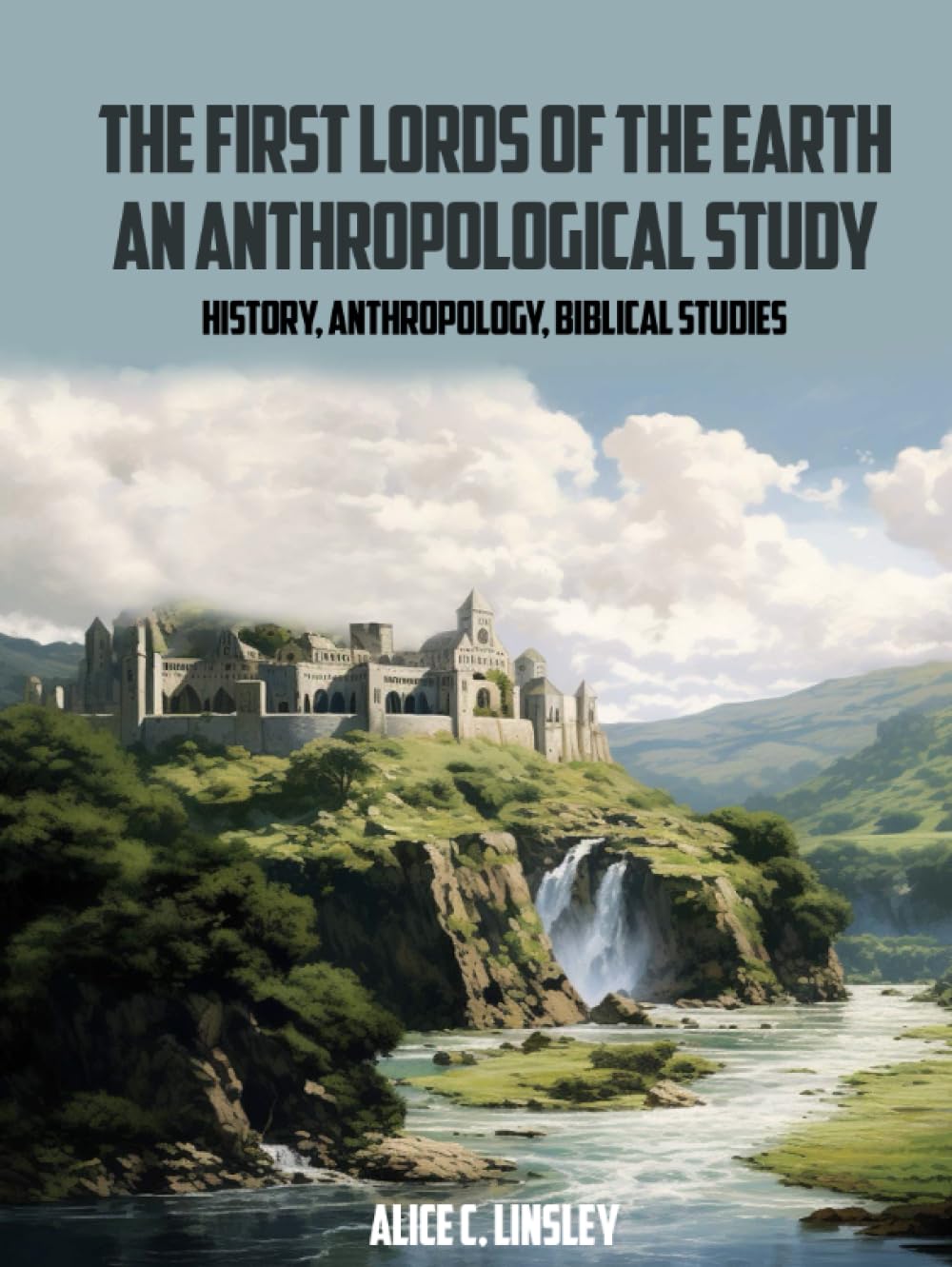
Dr. Tim Daughtry, a Christian Apologist, reviews The First Lords of the Earth: An Anthropological Study


The book of Genesis is typically read and interpreted by Christians and Jews in one of two ways. In one approach, Genesis is treated as a literal and accurate description of human origins and early human history. In this literalist view, Adam and Eve were not only real people, but they were also the first people on Earth. In the other approach, Genesis is read as a series of folk stories and myths that reveal important truths about humanity when interpreted allegorically. In this view, Adam and Even are characters in the creation story rather than real people who existed in history. The important point in this mode of interpretation is not that Adam and Eve were real historical characters but that that the story reveals important truths about human pride, disobedience, estrangement from God, and the hope of reconciliation.

In The First Lords of the Earth, Alice Linsley offers a fresh perspective through the lens of Biblical anthropology. Drawing from over forty years of research into Genesis along with scientific studies of ancient cultures, symbols, beliefs, and linguistic analysis, Linsley makes the case that the important figures of Genesis were not only real people but were members of the early Hebrew caste of ruler-priests who moved from Africa into the Fertile Crescent and Ancient Near East. As just one example, she makes the case that the Adam and Eve of Genesis were not the first humans, but neither were they mythical archetypes. Instead, Adam was a real ruler who lived in a vast area around the Nile River and whose sons Cain and Seth married the daughters of Enoch, who lived at the same time. The book’s exploration of early Hebrew kinship, marriage, and ascendancy patterns places these and later Biblical characters in an evidence-based historical context and provides rich anthropological context for the Scriptural accounts of the lives of later figures such as Abraham, Noah, and Joseph. The title of the book derives from the anthropological evidence that these and other early figures in Scripture were powerful ruler-priests with extensive domains in the lands described in the Bible.

The book offers a detailed look at a number of factors of early Hebrew culture, but one of the most interesting was the evidence that belief in God Father and God Son, along with a Messianic hope, was an important theme in Hebrew thought going back 6000 years that foreshadowed the beliefs of Christianity. Linsley makes a powerful case that the foundations of Christianity were present in early Horite and Sethite Hebrew beliefs that were present long before Abraham’s time.

The First Lords of the Earth is an excellent resource for a wide range of readers, including those interested in early Hebrew history for its own sake and for those who want to deepen their understanding of Scripture.


END


Related Reading: The First Lords and Their AuthorityThe First Lords and Messianic ExpectationThe Adam and Eve of HistoryBiblical Anthropology: Another Reason to BelieveA Book about the Nephilim


Wednesday, August 30, 2023

Response to a Review of "The First Lords"


Review at Amazon by "The Adawm"


I have been following Dr. Alice C. Linsley's work since 2009. Since that time I casually read some of her articles that she post on her blog. I have found her work to be fascinating, and it will take many in the Judeo-Christian worldview on a journey beyond your typical Sunday school sessions. I do admire her work but some areas are highly speculative, however, she will most likely say that her work is unfamiliar to the less astute.

An example of such speculative story telling is that Adahm (Adam) was a 'Hebrew,' suggesting that there were 'Hebrew' people in existence way before Abraham (?) I wonder how many scholars would agree with her claim? Her work also attempts to link the Hapiru with the Hebrew, her reasoning is that they are one and the same people.

Well, according to Dr. David A. Falk who is an Egyptologist, the word 'Hapiru' has a pretty messy history when you start looking in the 18th century BC text. The word, "Hapiru" isn't an ethnic identifier nor is it a tribal group. It's a class identifier and reflects a social group, so anyone can be labeled a "Hapiru" since a person's class and social status can vary with their ethnicity.

Hapiru has been linked to being an mercenary, refugee, outcast, foreigner, plunder, and raiders. Many Hapiru were Amorites as many Israelites were in fact Amorites. And there is an Amorite, Israelite and Hapiru overlap that does exist, however, not all Israelites are Amorites.

According to the Exodus narrative, a mix-multitude left Egypt (Khemet), which would have included many ethnic groups such as: Nubians, Libyans, Asiatics, Egyptians (Khemetians) and Cushites (Ethiopians).

As Dr. David A. Falk has stated: some Israelites were Amorites, and some Israelites were both Hapiru and Amorites. A Hapiru is not a tribal marker, marking one's ethnicity but it is a marker of a social class. Hapiru persons have been found as East Semitic, West Semitic, Hurrian (Horite) and Amoritic.

There is an etymological association with the word Hapiru and Hebrew. But the link is immaterial since 'Hapiru' represents a class and "Hebrew" (or Hebrew Israelite) represents a blood related ethnicity.
Linsley also claims that there were two divisions of the Hebrew caste, (1) the Horite Hebrew (2) the Sethite Hebrew which she identifies with Egyptian (Khemetian) Cosmology.

For many in the Judeo-Christian sphere this forecasting can be damaging to their theological and doctrinal creeds. My opinion of the matter is just the same as with the Hapiru and Hebrew controversy, that is, there is in fact some overlap that exists.

According to the Exodus narrative there was a mixed multitude that left. The problem with the Exodus story is the fact that there has not been any archaeological evidence that confirms this story outside of the biblical narrative. All current data points to the Ancient Hebrew Israelites as native Canaanites.

Regardless though, I still find her work to be quite fascinating. Thank you Alice C. Linsley for your 40+ years.


My response

It appears that this reviewer did not read the book very carefully. He does not address any of the main points of the book.

He clearly has read some of my blog posts where I have "speculated" (along with others) that the English word Hebrew is related to the word Habiru/Hapiru. However, in "The First Lords of the Earth" I state that the word Hebrew is derived from the ancient Akkadian word for priest which is "abru", and the caste was called "abrutu". Akkadian is the oldest known Semitic language, and it reveals that the Hebrew ruler-priest caste existed before the time of Abraham (c.2000 B.C.). Akkadian was the language of Nimrod's kingdom. Nimrod was a Kushite kingdom builder (Gen.10).

Further, the Horite and Sethite Hebrew are mentioned in the Ancient Pyramid Texts as maintaining shrines along the Nile, and some of these texts date to before the time of Abraham. The Horite and Sethite mounds were well established before Abraham's time. Abraham was NOT the first Hebrew.

My book is about the early Hebrew, long before the time of the Exodus of Jacob's clan called the "Israelites". It involves tracing the Hebrew dispersion out of the Nile Valley into many parts of the Ancient Near East. These were kingdom builders, and their marriage and ascendancy pattern drove their dispersion through the practice of sending away non-ascendant sons.

Analysis of the kinship pattern of the early Hebrew, beginning with the historical Adam and his contemporary Enoch, reveals that they had the same marriage and ascendancy pattern as Abraham and Moses.

I'm not familiar with Dr. Falk. However, reading about his work indicates that his field is Egyptology, not the biblical Hebrew. As far as I can tell, he has no knowledge of the social structure of the biblical Hebrew. Understanding their caste structure with its moieties, and their marriage and ascendancy pattern clarifies many difficult passages of the Old Testament.  


Related reading: The First Lords of the Earth is a Paradigm-Shifting Book; The First Lords of the Earth and Messianic Expectation; The Hebrew Were a Caste


Wednesday, September 14, 2011

Ronald Hendel: 10 Methods


A recently published book of essays edited by Ronald Hendel puts forward, in the voices of ten different Biblical scholars, new and enlightening ways to read and understand some of the most well-known stories in the Book of Genesis. Reviewed by Kent Harold Richards, this latest compendium of Biblical scholarship furthers our understanding of Genesis Bible study and demonstrates through each essay how to study the Bible effectively. Richards warns, however, that this book is not for the beginner. While he credits Ronald Hendel with concisely but thoroughly providing proper context for the essays, Richards warns that Ronald Hendel’s new book is predicated upon an understanding of Genesis Bible study, including both basic knowledge of the text and familiarity with traditional critical approaches.

Several of the topics addressed in this volume on Genesis Bible study include culture memory perspectives as demonstrated by focusing on slightly different dimensions of the Jacob story, reflections on gender and sexuality in Genesis, specifically as they pertain to the story of Sodom and Gomorrah, as well as the issues surrounding various Biblical translations. One of the essays in Ronald Hendel’s book emphasizes that the awareness of contemporary and now-obscure literary sources–and their redaction–is important in order to achieve a fuller understanding of the first few chapters of Genesis, and thus Genesis Bible study. Such an approach is lauded by Richards, who then goes on to support another essay’s premise that a useful tool in how to study the Bible effectively is not to apologetically smooth over questions that arise from readings of Biblical texts, but rather to approach the texts critically.

Richards’s review of this new book by Ronald Hendel makes a strong case for continually striving for fresh and new perspectives in the approach to Genesis Bible study. Richards’s endorsement of Reading Genesis: Ten Methods edited by Ronald Hendel–and reflecting the scholarship of ten dynamic voices in the field–is a strong case for adding both the book and the critical methods it advocates to the practice of Genesis Bible study.

Read it all here with the full text of Kent Harold Richards' review of Hendel's book.
 

Tuesday, April 12, 2011

Interesting Conversation at Amazon.com


Alice C. Linsley


My Amazon review of the book Coming to Grips with Genesis: Biblical Authority and the Age of the Earth (May 29, 2010) led to an interesting conversation with someone who posts by the name spfdgreg (hereafter “Greg”). He concluded that I have distorted Genesis. Here is the conversation.


Greg: Would you care to tell us where the Bible says that Cain and Seth married the daughters of this Nok fellow?

Alice: Nok is the Hamitic form of the Hebrew Enoch. Analysis of the Genesis genealogies reveals a unique kinship pattern in which the cousin brides name their firstborn sons after their father. Cain and Seth married sisters, the daughters of Enoch. That is why Cain and Seth's firstborn sons are named Enoch. Likewise, Lamech's daughter Naamah (Gen. 4) married her patrilineal cousin Methuselah (Gen. 5) and named their firstborn son Lamech, after her father. This Lamech (the Younger) is the father of Noah.

The anthropological tools of kinship analysis applied to the Genesis genealogies have demonstrated that the men listed are indeed historical persons. All this research is available to read online. Best wishes to you.


Greg: I am looking at Genesis right now, and there is no mention of either Cain or Seth marrying cousins. It says nothing about their wives, who could not have been cousins anyway, as that would mean the boys had aunts and uncles. But since Adam and Eve were the first humans the second generation did not have aunts and uncles. So the two must have married two of their sisters. Also, Methuselah's wife's name is not given, so why do you think he married Naamah? Yes, they were of the same generation, but the text gives the impression that Cain's clan did not live in the same area as Seth's. It is possible that the two never even met. Also, Seth's firstborn was named Enosh, not Enoch.


Alice: Enoch and Enosh are linguistically equivalent names as are Irad and Jared, and Elkanah and Elkaniah. Compare the spelling of names that come from the Masoretic text vs the Septuagint. You will see differences like these. All the men listed are rulers. Do a search for The Genesis Kings Lists and you will see the diagrams of the Genesis genealogies. Much easier to study the kinship pattern when looking at a diagram.
http://biblicalanthropology.blogspot.com/2011/02/genesis-king-lists.html

Also, http://biblicalanthropology.blogspot.com/2011/03/sister-wives-and-cousin-wives.html

Anthropological science shows that the Genesis genealogical information is authentic.


Greg: I have looked at your website, and would like to know where you get this stuff. I have taken seminary-level classes on the Old Testament, and nothing like this was mentioned, either in class, or in our textbooks. You are obviously using extra-biblical sources. Are you sure they are reliable?


Alice: I'm an anthropologist by training and hold a Master of Divinity degree. I believe that the Bible is true. My research is based on 32 years of study.


Greg: If you believe the Bible, why are you distorting what it says? It clearly says that Adam and Eve were the first two humans. On what grounds do you reject that?


Alice: In biblical parlance Adam and Eve ARE the archetypal first ancestors. Now the question is "Whose ancestors?" Genesis answers that question - Abraham's. As Abraham is our Father in the Faith, we must try to understand what this meant to his people. We can do that once we place Abraham in the correct cultural context. The Bible does that for us. We are told that he is a descendant of the ruling lines that originated in the Nile region of Africa (Kush/Cush). Are there similar origin stories to the Adam and Eve story in that part of the world? Indeed, ONLY in that part of the world. See the story of Kikuyu and Mumbi.
Perhaps this will clarify: http://jandyongenesis.blogspot.com/2010/09/abrahams-kushite-ancestors.html


Greg: I wonder if you are reading the same Bible I am. Adam and Eve are not the archetypal first ancestors, they are the ACTUAL first ancestors, of the entire human race. Abraham was not from the Nile region, he was from Ur of the Chaldeans, which was in Mesopotamia, not Egypt.


Alice: The archetype among Nilotic peoples does not require that we read the Adam and Eve story as historical. History is only one way of speaking about Truth.

Genesis makes it very clear that Abraham's ancestors came out of Africa. He is a descendant of Kush. The link I provided will show you how that is so. I don't invent the diagrams. They are diagrams of the information found in Genesis.

I recognize that this is all new, and that it feels as if I'm distorting, but that is not so. It appears that you are seeking to draw closer to the God of Abraham, so I hope that you will pursue this.

Greg: I appreciate your prompt replies to my questions, but I see a major problem with your theory. Cush [as the NKJV spells his name] was a son of Ham (Gen 10:6), but Abraham was a descendant of Shem (Gen 11:10-26), and was from Ur of the Chaldeans (Gen 11:27-31), not Africa. Your diagrams are in error.

Yes, I am seeking to draw closer to the God of Abraham, and I am doing so by the only means He has provided, His Son Jesus.


Alice: You fail to recognize that the ruler-priest lines intermarried exclusively, which is a trait of castes. Abraham's Horite people were a ruler-priest caste. Cain and Seth's lines intermarried exclusively, as did the lines of Ham and Shem. Therefore Abraham is a descendant of both Cain and Seth and Ham and Shem. That's what the Genesis genealogies reveal.

What the Bible shows about the intermarriage between Cain and Seth's lines is here: http://jandyongenesis.blogspot.com/2007/05/lamech-segment-analysis.html

What the Bible shows about intermarriage between Ham and Shem's lines is here:
http://jandyongenesis.blogspot.com/2009/03/sheba-lines-of-ham-and-shem.html

The lines of Abraham and his brother Nahor intermarried according to this identical pattern. The evidence is here: http://jandyongenesis.blogspot.com/2010/09/abrahams-nephews-and-niece.html

Abraham was living in Ur-Haran region because he is a descendant of Nimrod, the son of Cush. Nimrod was a great kingdom builder. His name is Nilotic. (See the Egyptian ruler Nimlot, as an example.) The Kushites spread their worldview across the ancient Afro-Asiatic Dominion as they moved north and eastward out of Africa. This has been verified by DNA studies, migration studies, and archaeological and anthropological findings.

I apologize for being short with you. We do agree that Jesus Christ, the Son of God, is the ONLY way to the Father.


Related reading: The Genesis King Lists; Moses' Horite Family; Samuel's Horite Family; The Horite Ancestry of Jesus Christ; The Marriage and Ascendancy Pattern of Abraham's Horite People; Lamech Segment Analysis


Thursday, January 13, 2011

John Coat's Book on Genesis


John R. Coats, a former Episcopal priest and graduate of Virginia Theological Seminary, has written Original Sinners: A New Interpretation of Genesis (2009), in which he presents Genesis not as historical narrative, but as metaphor and symbolism reflecting the reader's own life. In other words, he misses the point of the book! Genesis is about the origin of Messianic expectation among Abraham's Horite people and about the ancestry of Jesus Christ.

Here is part of a review of the book:
The introduction lays out the sources used in compiling the chapters. One form of understanding these is known as Source Theory, which is briefly explained. The notes at the end list each page's group of references for further study if one chooses, since some are more obscure than others. 
Coats sprinkles his thoughts with personal reflections of how he identifies with the people and places in Genesis. For the most part, these are interesting. The tale of an interaction with his daughter will curdle milk. While I realize it should be taken in context, Coats is also clearly out of line. 
Rather than an interpretation of each chapter, there are four large sections covering a certain person or group. These sets have a further breakdown of Acts - three subsets apiece. In a way, this makes a lot of sense. Readers can read straight through, or select whatever section appeals best. 
Despite Coats having a theological background, this book is easy enough to understand. There is a natural ebb and flow to his words so readers will want to know more as the pages go by. Is it the best interpretation out there? Each person can decide. Further study might be indicated, but perhaps not. Just don't consider this book the final word on the subject. Other ones exist.

From here.

Related reading: A Comprehensive List of Commentaries on Genesis, Good Commentaries of Genesis