Followers

Showing posts with label evolution. Show all posts

Tuesday, May 20, 2025

Facts About Evolution


This human footprint found in Kenya dates to 1.5 million years ago.


Dr. Alice C. Linsley

Bible-believing people often argue against "evolution" without specifying which aspect of evolution concerns them. Which of these basic points of evolution is a direct contradiction to what the Bible says about humans as a special creation? 

1. mutation
2. adaptation
3. natural selection
4. common ancestry of apes and humans

Touching on the first two points there is no doubt. Mutation and adaptation are the Creator's gifts to insure the survival of humans and other organisms.

Natural selection takes place, but it cannot be stated as a law since there exist some poorly adapted species which nevertheless thrive in their environments. If we are honest, we must admit that there are factors in survival that we don't understand, and which may pertain to supernatural oversight, something beyond the realm of science.

Common ancestry of apes and humans is what the late biologist Jonathan Wells famously called an “icon of evolution.” However, this theory lacks material evidence. It is a hypothesis and contrary to what Genesis asserts about humans as a special creation. Christians who take Scripture as our first authority cannot assume that human exceptionalism represents ignorance on the part of the ancient biblical writers.

Evolution refers to changes over time. The changes are within species. Further, rates of change vary greatly from group to group, and even among closely related lineages. The genetic codes of living organisms appear to have set boundaries beyond which the organism cannot change. The Bible refers to these as "types."

Some changes improve the organism's ability to survive. Some changes result in the organism being less well adapted to changing environments. This can lead to extinction.

Christians should try to understand what the data indicates about humans. To simply criticize anything that may be considered "evolution" exposes us to criticism by even fair-minded scientists. Consider this statement by Sabine Hossenfelder: "...scientists who claim, as Stephen Hawking did, that 'there is no possibility of a creator,' or as Victor Stenger has, that God is a 'falsified hypothesis,' demonstrate that they don’t understand the limits of their knowledge. When prominent scientists make such overconfident proclamations, they make me cringe." (An excerpt from Hossenfelder's Existential Physics, page 218.)

Further, ignorant statements about evolution reinforce the notion that the sciences and the Bible are in conflict. The sciences have a story to tell. The Messianic Faith expressed in Scripture also has a story to tell. Some are listening to the harmony and others are deaf.

Consider the data:

No material evidence has been found to prove that humans and apes have a common ancestry. Early or archaic human dentition is easily distinguished from that of apes. In humans, the back teeth are larger than the front teeth, and the canines are not pointed. Humans also lack the characteristic diastema or tooth gap found in apes.

When Jeremy DeSilva, a British anthropologist, compared the ankle joint, the tibia and the talus fossils of human ancestors ("hominins") between 4.12 million to 1.53 million years old, he discovered that all of the ankle joints resembled those of modern humans rather than those of apes. Chimpanzees flex their ankles 45 degrees from normal resting position. This makes it possible for apes to climb trees with great ease. While walking, humans flex their ankles a maximum of 20 degrees. The human ankle bones are quite distinct from those of apes.

The discovery of a complete fourth metatarsal of A. afarensis at Hadar that shows the deep, flat base and tarsal facets that "imply that its midfoot had no ape-like midtarsal break. These features show that the A. afarensis foot was functionally like that of modern humans." (Carol Ward, William H. Kimbel, Donald C. Johanson, Feb. 2011)
 
Humans have been on the earth for at least 3.4 million years. The range of physical features found among archaic humans is the same as the features found in modern human populations. Therefore, it is more accurate to speak simply of "archaic humans" (before about 300,000 years ago) and "modern humans" (more recent than 300,000 years ago).

"Homo" refers to humans. There were many groups of archaic humans and the oldest human fossils have been found in East Africa.

Neanderthals were fully human. The physical features associated with them have been found very widely, well beyond the Neander Valley of Germany where the first fossils were found.

Human innovation and technologies are evident in the record of human artifacts. This includes evidence of butchering as early as 3.4 million years ago.

The Rising Star Expedition retrieved and cataloged over 1000 early human fossils dating 236,000 to 335,000 years ago. These were buried ritually, expressing a religious nature among the Homo naledi community. The recovered fossils show the full range of anatomical features found in modern humans. The cave chambers had small hearths where well-preserved charcoal, ash, and discolored clay were found. The excavations also turned up many fragments of animal bone.

Sunday, October 22, 2017

Spinners of Evolutionary Fictions

The 250,000 year hand of Homo Naledi is virtually identical to that of modern humans.


Evolutionary Timeline

55 million years ago - First primitive primates evolve
15 million years ago - Hominidae (great apes) evolve from the ancestors of the gibbon
8 million years ago - First gorillas evolve. Later, chimp and human lineages diverge
5.5 million years ago - Ardipithecus, early 'proto-human' shares traits with chimps and gorillas
4 million years ago - Australopithecines appeared. They had brains no larger than a chimpanzee's
2.8 million years ago - LD 350-1 appeared and may be the first of the Homo family
2.7 million years ago - Paranthropus, lived in woods and had massive jaws for chewing
2.3 million years ago - Homo habalis first thought to have appeared in Africa
1.85 million years ago - First 'modern' hand emerges
1.8 million years ago - Homo ergaster begins to appear in fossil record
1.6 million years ago - Hand axes become the first major technological innovation
800,000 years ago - Early humans control fire and create hearths. Brain size increases rapidly
400,000 years ago - Neanderthals first begin to appear and spread across Europe and Asia
250,000 years ago - Homo naledi with hands like modern humans
200,000 years ago - Homo sapiens - modern humans - appear in Africa
40,000 years ago - Modern humans reach Europe

The critical period for understanding how evolutionary fictions are spun is here:

5.5 million years - Ardipithecus, 'proto-human' shares traits with chimps and gorillas
4 million years - Australopithecines appeared with brains no larger than a chimpanzee's 

Let's check the facts concerning Ardi and Lucy. Are they two different species of hominid? Are they ape or human?

Australopithecus afarensis (Lucy) and Australopithecus ramidus (Ardi) existed at the same time, c. 4 million years ago, and both had human hands, human feet, and walked upright. The assignment of 5.5 million years for Ardipithecus is unfounded. It represents an attempt to create a progression that fits the evolutionary theory. White's team assigned an age of approximately 4.4 million years.

The description of Ardi as a "proto-human" is also unsupported by the evidence. Ardi's anatomical structure is well within the range of human anatomy.

The claim that Lucy (AL 288-1) and the Australopithecines could not have been fully human because of their small brain size is pure foolishness. Brain size is not a measurement of the complexity of thought. The cranial size of both Ardi and Lucy is consistent with their body size.

"Australopithecus ramidus" was the name given to Ardi by the American paleoanthropologist Tim White who discovered the first Ardipithecus ramidus fossils in the Middle Awash area of Ethiopia between 1992 and 1994. Since that time, White's team have uncovered over 100 fossil specimens that it identifies as Ar. ramidus. Little has been said in public about the subsequent 100+ finds, which makes one wonder if they are significantly different from Ardi, and perhaps very like Lucy?

The name given to Ardi was to distinguish White's find from Lucy and thereby create an evolutionary bridge between apes and humans. Ardi is posed as the missing link, but the data is not there to support this theory.

Ardi was found only 46 miles from where paleoanthropologist Donald C. Johanson discovered Lucy in 1974 near Hadar village in the Awash Valley of the Afar Triangle in Ethiopia. Lucy and Ardi date to the same time, c. 4 million years. Ardi's anatomical structure has some anomalies, but these are still within the range of human anatomy. She had a rigid big toe that somewhat splayed outward. The large bones of her upper pelvis are consistent with human bipedalism. Some of the anomalies are explained by the fact that her remains were apparently trampled into mud by hippos. Her "badly crushed and distorted bones" were exposed millions of year later by erosion.

Tim White has spun a fiction using the same technique that Donald Johanson used in 1978, when he attempted to create the missing link by naming Lucy "Australopithecus afarensis." Australopithecus means "ape of the south."

Mary Leakey’s 1979 discoveries in Tanzania added to the evidence that humans walked the earth over 3 million years ago. At Laetoli, about 25 miles south of Olduvai Gorge in Tanzania, Leakey discovered footprints of a man, woman and child created about 3.6 million years ago and preserved under falling ash from the nearby Sadiman volcano. The raised arch and rounded heel of the footprints showed that whoever left these footprints walked as humans today.

Unfortunately, Johanson had already presented Lucy as more ape than human though Mary Leakey would have classified her Laetoli finds as Homo/human. She expressed her regret that “the Laetoli fellow is now doomed to be called Australopithecus afarensis.”

Johanson and Mary Leakey were scheduled to speak at a Nobel Symposium in Sweden in May 1978. The conference honored Mary Leakey, who received a medal from the King of Sweden for her scientific investigations. Mary Leakey received the Golden Linnaean Medal, but also was very embarrassed when Johanson announced the new name - Australopithecus afarensis - for his Afar Triangle finds and included Mary Leakey's 4 million year old Laetoli specimen (jaw bone LH4) from Tanzania as an exhibit.

Johanson, who was scheduled to speak before Mary Leakey, scooped Mary's speech. Leakey was perturbed that Johanson had named her discoveries, using a designation at odds with what she believed to be the evidence. Johanson's designation of ape for Lucy has held, though today Johanson has doubts based on the more recent discovery of a complete fourth metatarsal of A. afarensis at Hadar. This shows the deep, flat base and tarsal facets that "imply that its midfoot had no ape-like midtarsal break. These features show that the A. afarensis foot was functionally like that of modern humans." (Carol Ward, William H. Kimbel, Donald C. Johanson, Feb. 2011) Read the report here: http://science.sciencemag.org/content/331/6018/750


One of two fossilized bones from Dikika, Ethiopia, that show evidence of stone tool use. 
Credit: Dikika Research Project


A. Afarensis had human dentition, used polished bone tools, and controlled fire. Some of the earliest evidence of controlled use of fire by humans was found at Swartkrans in South Africa. Other sites that indicate fire use include Chesowanja near Lake Baringo, Koobi Fora and Olorgesailie in Kenya. Discoveries in Dikika, near Gona and Bouri (Ethiopia) indicate that they used flints to scrap, saw and chop. Two fossilized bones have been found that show the marks of stone tools. On the basis of low-power microscopic and environmental scanning electron microscope observations, these bones show unambiguous stone-tool cut marks for flesh removal and to access bone marrow.

As the world renown paleoanthropologist John Hawks has noted, arguing about species has more to do with ego than with evidence. He writes, 
"Just today, I got notification of a new paper by Walter Neves and colleagues, in which they suggest that Australopithecus sediba and Homo naledi are actually South African representatives of Homo habilis. Some people might scoff at this—after all, the Dinaledi fossils are only 236,000–335,000 years old, while the latest-known H. habilis is around 1.6 million. But a young date for some fossils doesn’t bar them from membership in a species with much older fossil representatives. Identity is tested with morphological evidence, not geological age."

Monday, October 24, 2016

A Theological and Scientific Conversation about Humans


A reader has asked: "What about the idea that the evolution of the human physical body from other primates is a possibility, as long as the soul is believed to have been directly created by God?"

Response from a Roman Catholic friend:

That is not an historic Christian view. St. Paul and Thomas Aquinas make it clear that the human is not human without the body.

Aquinas believed that the soul is the form of the body, as Aristotle said, and gives it life and energy. But against Neo-Platonism, he taught that the soul and body are inextricably linked and that the soul this declared dogma by the ecumenical Council of Vienne in 1312, which the Catholic Church consider binding. So the question arises: how can the Catholic Church teach that the soul is created immediately (i.e., without secondary efficient causes) by God at the moment of conception? That teaching of the Church is reaffirmed at CCC §366.

Both body and soul are essential to the individual human's being. God creates the soul ex nihilo, and the parents generate from gametes the body that the soul informs and vivifies, thus enjoying the privilege of co-creating with God.

Well, there is no reason to suppose that the two teachings are mutually inconsistent. By generating the body of their child, and thus acting as efficient causes of their child, parents only produce the material cause, not the formal cause, of the entire person who is their child. The soul does not come into being without the body and the body does not come into being without the soul. Yet the body is that of a human person, from the moment of conception, only in virtue of God's infusing it with a spiritual soul.

The soul need not, therefore, be itself produced by the parents in order to be the form of the body. And so the dogma that the soul is the form of the body offers no support for traducianism, which some but not all Church Fathers held. Aquinas even argued: The process of spiritual generation is impossible; since the soul is immaterial and indivisible, no spiritual germ can be detached from the parental soul (cf. St. Thomas, Summa Contra Gentiles II, 86; Summa Theologiae I:90:2, I:98:2, etc.).


Response from JandyonGenesis:  Archaic humans were fully human. The essence of the human is Trinitarian: body, mind and soul (anima). There is no substantial evidence that archaic humans lacked this essence. In fact, to argue such is to assert that such creatures are not human.

We must begin by identifying the 4 keys ideas of evolution and examining the evidence for each:
1. mutation
2. adaptation
3. natural selection
4. common ancestry or common descent
Touching on the first point there is no doubt that mutation is a reality. Living organisms under go mutation both gradually over long periods of time and sometimes rather quickly. However, there appears to be a boundary to mutations in a given class of organisms. This is referred to as horotely, a Greek word that is a reference to horos - limit or boundary, and to the word horizon. The term is likely related to Horus, the "son" of the Creator who was said to be the fixer of boundaries.

Adaptation is also a reality. God created organisms with the ability to adapt to their changing environments. It appears that organisms gradually "accumulate" certain physiological, behavioral, and structural traits that aid their ability to survive and reproduce under existing environmental conditions. Those that are unable to adapt become extinct.

Natural selection takes place.  The theory of evolution by natural selection does not attempt to explain how life first began or why living things are on Earth. Rather, the theory of natural selection explains the observable processes that change the physical characteristics of living things through time. That said, we are still speaking of the theoretical rather than a law of nature, since some poorly adapted organisms nevertheless thrive in their environments. If we are honest, we must admit that there are factors in survival that we do not understand, and which may pertain to supernatural oversight, something beyond the realm of science.

Common ancestry or common descent of all living organisms is a hypothesis proposed by Charles Darwin in On the Origin of Species.  He believed that it is likely that all currently living organisms on Earth share a common genetic heritage with each being the descendant from a single original species. He wrote, "There is a grandeur in this view of life, with its several powers, having been originally breathed into a few forms or into one."

The common descent hypothesis is suggested by developments in the Cambrian explosion and later, but anthropologically speaking, there is no physical evidence to permit us to state as fact that humans and apes have a common ancestor. Molecular genetics has not proven this, but it has provided a model for how this might be so. We must accept that common ancestry is quite contrary to what Genesis asserts about humans as a special creation. As Christians who take Scripture as a first/primary authority, we cannot gloss over this or assume that this view represents ignorance on the part of the ancient Biblical writers.

The Rising Star Expedition in Southern Africa has retrieved and cataloged over 1000 hominid fossils, and large numbers of fossils remain at the underground site to be retrieved in future expeditions. The findings of this expedition are forcing paleontologists to rethink the evolutionary model. First, these archaic humans practiced ritual burial. Second, these fossil remains reveal a wide range of physical features. The features that have been identified are found in modern humans. One feature that has been shown in various images is of a skull with a protruding chin (projecting jaw). This same feature is found in R1b lineages from Africa to Serbia to Ireland, and most commonly among the metal working castes (who intermarried) and who dispersed widely in service of ancient rulers.

My concern is that we not allow labels to skew our interpretation of the data. When we look at the labels attached to various remains we find see that these are not very helpful. Neanderthals were fully human. The features associated with them have been found very widely, well beyond the Neander Valley of Germany.

A. Afarensis also had human dentition which is quite easily distinguished from that of apes. In humans, the back teeth are larger than the front teeth (not so with apes), and the canines are not pointed. Humans also lack the characteristic diastema or tooth gap found in apes.

Mary Leakey’s 1979 discoveries in Tanzania added to the evidence that humans walked the earth about over 3 million years ago. At Laetoli, about 25 miles south of Olduvai Gorge in Tanzania, Leakey discovered footprints of a man, woman and child created about 3.6 million years ago and preserved under falling ash from the nearby Sadiman volcano. The raised arch and rounded heel of the footprints showed that whoever left these footprints walked as humans today. Unfortunately, Donald C. Johanson had already announced to the world that the finds were apes, though Mary Leakey would have classified her Laetoli finds as Homo/human. She expressed her regret that “the Laetoli fellow is now doomed to be called Australopithecus afarensis.”

Johanson and Mary Leakey were scheduled to speak at a Nobel Symposium in Sweden in May 1978. The conference honored Mary Leakey, who received a medal from the King of Sweden for her scientific investigations. Mary Leakey received the Golden Linnaean Medal, but also was very embarrassed when Johanson announced the new name - Australopithecus afarensis - for his Afar Triangle finds and included Mary Leakey's 4 million year old Laetoli specimen (jaw bone LH4) from Tanzania as an exhibit. Johanson, who was scheduled to speak before Mary Leakey, scooped Mary's speech. She was angry that Johanson had named her discoveries, using a designation that was totally at odds with what she believed to be the evidence. Johanson's name stuck though today, based on more recent discoveries, he doubts the accuracy of the ape designation.

Based on years of teaching students, I have found that labels such as Neanderthal and Australopithecus tend to cause confusion. Among these groups the range of physical traits is the same as the range of traits found in modern human populations. So much so, that it is more helpful and more accurate to speak simply of archaic humans and modern humans. This is one reason I believe that the earliest humans appeared on Earth about 4 million years ago, and although they show archaic anatomical features, they were created fully human with the potential to develop (evolve) into modern humans.

Cranial capacity is not an indication of complexity of thought. The bicameral brain and the binary feature in the order of creation are what trigger complexity of thought and innovation. This binary pattern in the order of creation and among living organisms is found in Genesis, but has been largely overlooked by Bible commentators.

Related reading:  Fully Human From the Beginning; Binary Feature Triggered Greater Diversity;  Questioning the Common Ancestry Hypothesis

Wednesday, May 14, 2014

Darwin: Fact and Fiction


Alice C. Linsley


“In my most extreme fluctuations I have never been an atheist in the sense of denying the existence of a God.” - Charles Darwin in a Letter to John Fordyce, 1879

Darwinian evolution hinges on 4 aspects: mutation, adaptation, common ancestry and natural selection. The first two are facts. The second two lack physical evidence. The unity of biological life can be explained by paradigms other than common ancestry. There is no physical evidence to support the view that apes and humans share a common ancestry. This in spite of 100 years of frantic searching for the fossil evidence. In fact, the evidence suggests that humans appeared suddenly and fully human on the surface of the Earth about 4 million years ago. These were fully human, though anatomically archaic, not modern. Modern human anatomy emerges after about 200,000 years ago.

Natural selection does seem to happen, but it cannot be taken as a law of biology since many creatures thrive who are not particularly well adapted to their environments. Even Richard Dawkins has reservations about humans and natural selection. He states, "As Darwin recognized, we humans are the first and only species able to escape the brutal force that created us, natural selection….We alone on earth have evolved to the point where we can…overthrow the tyranny of natural selection.”

He makes a case for altruism emerging from kinship and tribal reciprocity and attempts to explain how the "selfish gene" makes humans unique among the other living creatures. He believes we have a "lust to be nice." Using Dawkins' logic, we might argue that the survival of humans over these millions of years suggests that from the beginning we have been both self-defensive and altruistic. That suggests that natural selection has never been a big factor in human evolution.

Finally, natural selection cannot explain the origin of first life.

To those unfamiliar with the particular problems faced by scientists trying to explain the origin of life, it might not seem obvious why invoking natural selection does not help to explain the origin of the first life. After all, if natural selection and random mutations can generate new information in living organisms, why can it also not do so in a prebiotic environment? But the distinction between a biological and prebiotic context was crucially important to my argument. Natural selection assumes the existence of living organisms with a capacity to reproduce. Yet self-replication in all extant cells depends upon information-rich proteins and nucleic acids (DNA and RNA), and the origin of such information-rich molecules is precisely what origin-of-life research needs to explain. That’s why Theodosius Dobzhansky, one of the founders of the neo-Darwinian synthesis, can state flatly, ‘Pre-biological natural selection is a contradiction I terms.’–Stephen C. Meyer (Darwin’s Doubt, p. viii)


Monday, January 20, 2014

The Atheist's Fallacious Argument


Alice C. Linsley


"As we all know, for most believers religion, to be fully embraced as a way of life, must be based—at least in principle and in part—on evidence. But the absence of that evidence has given rise to the discipline of theology, which is based on the insupportable premise of rationality without reason."  (From here.)


The writer of this blog post is the author of a book on evolution and an atheist. He has gathered a following of youthful atheists of whose loyalty he is so certain that he shamelessly appeals to the fallacy of Ad Populum: "As we all know..." and insists on that basis that X must therefore be true.

From there, he attempts to assert an absence of evidence upon which to base religious faith. He seems not to understand that the true person of faith is also a person who pursues the evidence of faith. Religious claims, as with all truth claims, must be tested. No one is expected to believe claims without support.

Jesus understood this and provided evidence of His two natures as God-Man. The great apologists of the Christian faith are people who are able to connect the dots of evidence exactly because they have such a good understanding of Reality that they know what to look for and where they ought to look. If I do not believe that something is true I will not notice the evidence for that something's existence. 

The atheist is not able to have a reasonable conversation about the nature of faith and reason because he has dismissed the possibility that these might work synergistically. His mind is closed on this matter and he regards all evidence to the contrary as lacking in credibility. What we consider “credible” depends on our preconceptions and prejudices.

Persons of faith, especially self-proclaimed Christians, are characterized as ignorant, and indeed many are ignorant of the facts when it comes to evolution. In his characterization of all Christians as scientifically ignorant we encounter yet another fallacy: that of comparing things which are not comparable. When it comes to thinking scientifically, the average church-goer is no different than the average person who does not attend church. However, were we to compare religious people who are scientists with non-religious scientists, we would find that these two groups have much in common. Both think in terms of proofs, evidence, and rather quickly recognize the lack thereof. 

Consider, for example, the molecular geneticists who write for BioLogos, or the many Christians in STEM careers who are members of the American Scientific Affiliation. These have more in common with non-religious scientists than they do with church-goers who have no scientific training. Indeed, many of these Christians in science interpret findings through the evolutionary lens. They make the same claims concerning mutation, adaptation, natural selection, and common ancestry, yet one group believes in a Creator and the other group largely does not. 

Finally, the writer misrepresents the facts concerning the development of what he calls "theology." He has accepted the widespread notion that religion is the vestige of primitive superstitions intended to explain natural phenomena before the advent of the scientific method. It is an anthropologically inaccurate viewpoint. Instead, the evidence indicates that science developed out of religious concerns. The same can be said for technologies. The first "alarm" clocks were invented by monks so that they would rise at the proper hours for prayer. The earliest astronomers studied the fixed stars, constellations, solar cycles, and moon phases and recorded what they observed. They are credited with the development of sidereal astronomy as early at 4200 BC. They wanted to understand the celestial pattern because they believed it to be the pattern on earth: "as in the heaves, so on earth." Anthropologists have observed this mindset among primitive and tribal peoples around the world.

Sidereal astronomy is real science, based on observation of the arrangement and movement of the fixed stars and planets. This science originated among Abraham's Nilo-Saharan ancestors who had recorded information about the fixed stars and clock-like motion of the planets and constellations for thousands of years. By 4245 BC, the priests of the Upper Nile had established a calendar based on the appearance of the star Sirius that becomes visible to the naked eye once every 1,461 years. Apparently, they had been tracking this star and connecting it to seasonal changes and agriculture for thousands of years. The priest Manetho reported in his history (241 BC) that Nilotic Africans had been “star-gazing” as early as 40,000 years ago. They shared this knowledge with the kings of Egypt.

The ancient Egyptians shared the knowledge with the ancient Greeks. Plato claimed that the Africans had been tracking the heavens for 10,000 years. He studied with an Egyptian priest for 13 years and knew about Earth's Great Year. This is the time of between 25,000 and 28,000 years that it takes for Earth to complete the cycle of axial precession. This precession was known to Plato who defined the "perfect year" as the return of the celestial bodies (planets) and the diurnal rotation of the fixed stars to their original positions. The ancients understood much more than we moderns recognize, and as much it may pain the atheist's pride, they were people of faith.

Thursday, January 16, 2014

The Slatest Lambasts Texas "Creationism"


Texas Public Schools Are Teaching Creationism
by Zack Kopplin

(Kopplin is a science education activist who has fought against creationism being taught with public money.)


When public-school students enrolled in Texas’ largest charter program open their biology workbooks, they will read that the fossil record is “sketchy.” That evolution is “dogma” and an “unproved theory” with no experimental basis. They will be told that leading scientists dispute the mechanisms of evolution and the age of the Earth. These are all lies.

The more than 17,000 students in the Responsive Education Solutions charter system will learn in their history classes that some residents of the Philippines were “pagans in various levels of civilization.” They’ll read in a history textbook that feminism forced women to turn to the government as a “surrogate husband.”

Responsive Ed has a secular veneer and is funded by public money, but it has been connected from its inception to the creationist movement and to far-right fundamentalists who seek to undermine the separation of church and state.

Read it all here.

I read the article and I still don't know exactly what is being taught. "Creationism" isn't defined and there are many forms of Creationism. Does the curriculum teach Young Earth Creationism?  Does it teach Theistic Evolution, or maybe Intelligent Design? From this article I have the impression that there are various views being presented. That seems like a good approach for schools, but it may be that Kopplin's real objection is that all the views assume the existence of a Creator. I would be willing to bet that this is the assumption of the vast majority of Texans, and they do pay taxes to educate their children.

Kopplin is not well informed about the nuances of Creationism. He poses the term as anti-science, which is not uniformly the case. Too much vitriol, not enough information!

Related reading:  Kansas Bill Calling for Objectivity in Science Fails; A Scientific Timeline of Genesis; Americans Sick of Partisan Science; Questioning the Common Ancestry Hypothesis; Austin L. Hughes on The Folly of Scientism; Biblical Anthropologists Discuss Darwin; 12 Blogs on Creationism and Evolution; A Christian School Committed to STEM


Saturday, August 3, 2013

Darwin's Doubt


To those unfamiliar with the particular problems faced by scientists trying to explain the origin of life, it might not seem obvious why invoking natural selection does not help to explain the origin of the first life. After all, if natural selection and random mutations can generate new information in living organisms, why can it also not do so in a prebiotic environment? But the distinction between a biological and prebiotic context was crucially important to my argument. Natural selection assumes the existence of living organisms with a capacity to reproduce. Yet self-replication in all extant cells depends upon information-rich proteins and nucleic acids (DNA and RNA), and the origin of such information-rich molecules is precisely what origin-of-life research needs to explain. That’s why Theodosius Dobzhansky, one of the founders of the neo-Darwinian synthesis, can state flatly, ‘Pre-biological natural selection is a contradiction I terms.’–Stephen C. Meyer (Darwin’s Doubt, p. viii)


There is a fascinating new book from Dr Stephen C. Meyer, a Cambridge graduate, and Director of the Center for Science and Culture in Seattle, Washington.

Darwin's Doubt appeared in June 2013 and is available on Amazon. Meyer's book provides a comprehensive analysis of the challenge to paleobiologists of explaining the sudden appearance in the fossil record of numerous new life forms without any obvious ancestors. This is often called the "Cambrian explosion."

In Meyer's view, the fossil record does not align with the Neo-Darwinian explanation of evolution. The hugely complex steps required to generate new body plans through gradual and random changes seems doubtful in light of the sudden appearance of both simple and more complex organisms.

I address this from a different angle in Does the Binary Feature Signal Greater Complexity?

It takes courage for a scholar to question the dogma of random mutation, natural selection and common ancestry, and if you read the reviews of Meyer's book, you will discover just how angry his reasonable arguments have made some Neo-Darwinians.


Related reading: Thomas Nagel: Neo-Darwinian Conception is False; Questioning the Common Ancestry Hypothesis; Darwin: Fact and Fiction


Wednesday, July 31, 2013

Did Humans Evolve from a Chimp-Pig Hybrid?


Alice C. Linsley


The oldest fully human archaic fossils date to about 4 million years and were found in East Africa and Cameroon. The Australopithecus anamensis tibia indicates bipedalism. Australopithecines possess anatomical traits of the pelvis, femur and spinal column that facilitate bipedal locomotion. Their brains were small because they were proportional to their bodies. The size of their brains does not mean that they were more like apes than humans. These humans were anatomically small, but there are people living today in parts of Africa who resemble Lucy and her kin.

Mary Leakey suspected that these were archaic humans after her work in Ethiopia. She certainly had reason to think so after her 1979 discoveries in Tanzania. That was the year that Mary discovered the earliest known footprints of hominids, animals and birds at Laetoli. The footprints were preserved about 3.6 million years ago under falling ash from the nearby Sadiman volcano. The raised arch and rounded heel of the footprints showed that these creatures walked as humans today.

Unfortunately, Lucy and her kin were given the name "Australopithicus" (meaning southern ape) by Donald C. Johanson, though Mary Leakey would have called the finds Homo, as she thought they were. She expressed her regret that "the Laetoli fellow is now doomed to be called Australopithecus afarensis," a name contrary to the evidence that Lucy and her people walked upright, had oppositional thumbs, short fingers, human dentition, controlled fire, shared their food, and used flints to scrap, saw and chop.

The physical evidence suggests that humans appeared suddenly and unheralded on the Earth around 5 million years ago in Africa.

Dr. Eugene McCarthy is a geneticist who studies hybridization in animals. He curates a biological information website called Macroevolution.net. McCarthy believes that human origins can be explained by hybridization between pigs and chimpanzees. Read more here.

If you believe that all living organisms emerged from a common ancestor, there is no obstacle to hypothesizing a chimp-pig origin for humans.


Wednesday, May 22, 2013

Evangelicals Surrender Too Much Ground to Darwin


As the battle between Darwinism and the Bible rages, some evangelicals have backed away from maintaining that Adam and Eve were real, historical individuals created in the way Genesis 2 relates:

“… the LORD God formed the man of dust from the ground and breathed into his nostrils the breath of life, and the man became a living creature. … So the LORD God caused a deep sleep to fall upon the man, and while he slept took one of his ribs and closed up its place with flesh. And the rib that the LORD God had taken from the man he made into a woman and brought her to the man.”

In a just-published article from the Westminster Theological Journal, Westminster Theological Seminary professor Vern Poythress brilliantly explains why such a surrender is wrong biblically and scientifically. Poythress, with both a Th.D. and a Harvard Ph.D. in mathematics, is well-positioned to write about both theology and evolutionary theory. He has published 13 books, including Redeeming Science and Redeeming Sociology, and numerous scholarly articles. We post this new one with the author’s and WTJ’s permission.
— Marvin Olasky, World Magazine (May, 2013)

Read Vern Poythress's article here.


Related reading: Between Biblical Literalism and Biblical Illiteracy; YEC Dogma is NOT Biblical; Facts About Human Origins; DNA Research Confirms Kushite Migration of Genesis 10; Contradicting Evolutionary Theory; Is Genesis Really About Human Origins?

Sunday, May 19, 2013

Questioning the Common Ancestry Hypothesis


Alice C. Linsley


Today I am simply sharing some thoughts and your comments are most welcome!


Language
The largest number of distinct phonemes is found in Africa. Fewer distinct phonemes are found the farther we move from Africa. This suggests that when it comes to human language evolution does not necessarily lead to greater complexity.

Genetic diversity
Africa is also where the greatest genetic diversity is found. There is less genetic diversity in populations farther from Africa. One would expect greater, not less diversity given the evolutionary models. The genome alignments of Neanderthal humans, Denisovan humans, and modern humans indicate little genetic differences.

Migration and dispersion
The movement of modern humans out of Africa poses a problem for the evolutionary view that over time there is greater complexity and diversity. How do you resolve this apparent contradiction?

Biblical ontology
In my mind, there is little doubt that evolution, as a population event, leads to speciation. The alignments of sequences when compared suggest the unity or oneness of biological life on Earth. I don't believe that the only explanation for this is common ancestry. It seems to me that the answer is Christ, by whom, in whom, and through whom all things were created. He is the ground of life and the Church's ontological answer to commonality. This is affirmed in John's Prologue. This is a metaphysical conception and therefore impossible to test as a hypothesis. We affirm this by faith.

Molecular genetics is about the business of testing the common ancestry hypothesis which makes sense given present models. I believe it is trust-worthy science based on sound methods. That said, I see a conflict with the Genesis picture of sudden population generation. We remember that Cain, the first ruler in the Bible, was building a city, and a city requires a population.

The population size models estimate an original population of about 10,000 in Africa, and Cain was a Proto-Saharan ruler, so the general geographical location is right, but we cannot on the basis of Genesis say that Cain's subjects represent the first human population. Indeed, it appears more that the so-called Apes of the South (Lucy and similar finds in Cameroon) were fully human, though anatomically archaic, and that they appeared rather suddenly and unheralded on the surface of the Earth about 4 million years ago.


Related reading: Biblical Anthropologists Discuss Darwin; Is Genesis Really About Human Origins?; Thomas Nagel: Neo-Darwinian Conception is False


Friday, March 22, 2013

Thomas Nagel: Neo-Darwinian Conception is False


Mind and Cosmos: Why the Materialist Neo-Darwinian Conception of Nature Is Almost Certainly False | By Thomas Nagel | Oxford University Press | September 2012)
ISBN: 0199919755

Atheist philosopher Thomas Nagel explains why the materialist Neo-Darwinian conception of nature is almost certainly false.


David Gallagher

In a 1997 book review, Harvard biology professor Richard Lewontin, speaking for the scientific community, famously remarked, “It is not that the methods and institutions of science somehow compel us to accept a material explanation of the phenomenal world, but, on the contrary, that we are forced by our a priori adherence to material causes to create an apparatus of investigation and a set of concepts that produce material explanations, no matter how counter-intuitive, no matter how mystifying to the uninitiated. Moreover, that materialism is absolute, for we cannot allow a Divine Foot in the door.”

It looks like the door may be opening, at least a crack.

Last fall, Philosophy Professor Thomas Nagel of New York University published a small book entitled Mind and Cosmos: Why the Materialist Neo-Darwinian Conception of Nature is Almost Certainly False (Oxford University Press). The book is important for more than its contents. Nagel is one of the most respected Anglo-American philosophers and also a self-declared atheist (“I lack the sensus divinitatis that enables—indeed compels—so many people to see in the world the expression of divine purpose”). Consequently his criticisms of neo-Darwinian evolutionary theory cannot be written off as one more attempt to defend religion, but rather need to be dealt with on their own terms, as attacks on the adequacy of the theory itself.

Nagel accepts the central Darwinian thesis that present-day species are descendants of earlier, different species. Yet he considers valid many of the negative criticisms of Neo-Darwinian evolutionary theory leveled by Intelligent Design thinkers like Michael Behe and Steven Meyer. Moreover, he acknowledges that many large questions about the origins and development of life remain unsettled, for example the origins of life itself, as well as whether all the chance mutations and natural selection needed to produce present-day species could occur in the available time.

But even more importantly, Nagel calls into question the materialist-reductionist view of nature, which, as Richard Lewontin admits, is accepted a priori by most evolutionists and perhaps by most scientists. In this view of nature, everything that exists is composed of matter and can have only those properties that arise from the basic properties of the underlying material constituents. Biology is reduced to chemistry, and chemistry to physics. Everything that occurs in the universe is to be explained, at least potentially, by the laws, forces, particles and properties that are described by physics.

Nagel points to three things that we encounter in the world which cannot be adequately explained within this materialist-reductionist framework: consciousness, reason or mind, and moral values. We should not try to explain these things away—as often happens—just because they do not square with the reductionist view of nature. Rather, he argues, it is the reductionist view itself that needs to be questioned.

By consciousness Nagel means the fact that beings such as animals and certainly humans have awareness of things, that is, they have subjective experiences like smelling coffee, seeing the blue sky, feeling fear. From the materialist-reductionist point of view, these phenomena are simply occurrences in the brain, a certain pattern of synapses firing that follows from some stimulation, coming, for example, from the eye through the optic nerve. But, as Nagel points out, this electrical activity measured by neuroscientists in the brain is not identical with the person’s subjective experience of smell or color. The “scientific” description of the brain activity always remains on the “outside” and never captures the actual experience of color or smell or fear. In the end, the standard reductionist explanations simply fail to explain the lived experience.

In the case of mind or rationality, Nagel argues that, in addition to the problem of consciousness, it seems difficult to see how reason as a reliable faculty for discovering the truth could simply evolve. Following the lead of contemporary philosopher, Alvin Plantinga, Nagel thinks that natural selection would select for behavior favorable to survival, but such behavior might follow from false beliefs as well as true beliefs. So there is a possibility that the mind has evolved to register as true what in fact is not true. And once a person reflects on this fact, he cannot trust that something is true, even if it seems to him to be such. We may believe many scientific truths—including evolutionary theory—not because they are actually true, but because our minds have evolved in such a way that we think it is true. So the theory of evolution through natural selection seems to undermine the reliability of reason.

Finally, Nagel, like many other thinkers (e.g., C.S. Lewis in The Abolition of Man), points out that the materialist-reductionist view of nature provides no foundation for objective moral values or laws. Nothing in a physics textbook provides moral rules for how human beings should behave. But objective values of some sort, he argues, are necessary for any true, binding morality. Any values created by human beings, whether individually or collectively, can be changed by human beings and ultimately do not present themselves as binding.

Nagel concludes that evolutionary theory, if it is to be truly explanatory of nature, needs to be such that it can explain consciousness, mind and value. This will require a view of nature that is much richer than the contemporary materialist-reductionist view. When it comes to alternatives, however, Nagel is tentative and admittedly vague. In many ways his suggestions for enriching our understanding of nature are reminiscent of Aristotle’s views of nature. For example, he thinks that it will be necessary to introduce a notion of teleology (goal-orientedness) into our conception of nature, so that the emergence of the human mind is more than a simple chance event.

Nagel explicitly recognizes that a theistic origin for the natural world would solve all the problems he sees in the reductionist view. God can create a kind of matter out of which conscious beings can be formed. God can create minds capable of grasping the truth with certainty. And God can create a moral law. But Nagel chooses not to go down that path. His reasons are not really intellectual, but simply reflect his personal preference for atheism. Even so, his little book will have an impact on the ongoing debates about evolutionary theory and the basic constituents of the natural world. Whether he admits it or not, the divine foot is pushing open the door.

David Gallagher writes from New York.

From here.


Related reading:  Biblical Anthropologists Discuss Darwin; The Evolution of Darwinian Evolution; Theories of Change and Constancy


Wednesday, October 17, 2012

Have Humans Outgrown Natural Selection?


Richard Dawkins thinks so.  He states: "As Darwin recognized, we humans are the first and only species able to escape the brutal force that created us, natural selection….We alone on earth have evolved to the point where we can…overthrow the tyranny of natural selection.”

He makes a case for altruism emerging from kinship and tribal reciprocity and attempts to explain how the "selfish gene" makes humans unique among the other living creatures. He believes we have a "lust to be nice."

Dawkins' video is here.

Using Dawkins' logic, we might as well argue that the survival of humans over these millions of years suggests that they have had a constant tendency to be both self-defensive and altruistic. Maybe natural selection has never been as big a factor in human evolution as Dawkins has maintained.


Related reading:  Was Lucy Human?; Theories of Change and Constancy; The Evolution of Darwinian Evolution

Monday, August 27, 2012

"The Science Guy" Reveals His Ignorance


Alice C. Linsley


In this clip posted online on Thursday, Bill Nye bashes creationists and those who doubt the claims of Darwinian evolutionists. He lumps all creationists together and is apparently unaware that Old Earth Creationists accept evident aspects of Darwin, such as adaptation and mutation. We part ways, however, when it comes to Darwin's theory that humans and apes share a common ancestor. Why should we believe this when the material evidence does not support the theory? Instead, the evidence indicates that Lucy and her community were fully human.

Nye says that a creationist worldview would have to be "fantastically complicated," again referring to Young Earth Creationists whose beliefs cannot be substantiated by the sciences. He believes (and I hope he is right) that "in another couple of centuries that world view, I'm sure, will be, it just won't exist. There's no evidence for it."

Nye takes issue with Creationists who believe the Earth is between 6000 and 10,000 year old. He points to the great age of fossils and stars as proof that their view is not tenable. He said,

"Here are these ancient dinosaur bones or fossils, here is radioactivity, here are distant stars that are just like our star but they're at a different point in their lifecycle. The idea of deep time, of this billions of years, explains so much of the world around us. If you try to ignore that, your world view just becomes crazy, just untenable, itself inconsistent."
 
I agree. That is why I have exposed the false assumptions of Young Earth Creationists. I have also exposed the false assumptions of Darwinians. Good science must operate with skepticism about all assumptions.
 
Nye encourages parents to teach evolution to the next generation, but he never clarifies what he means by that. Is he asking that they teach theistic evolution, allowing for God and the supernatural? Or is he recommending the materialist view of evolution as a mechanism not requiring a Creator?
 
Theistic evolution has strong advocacy, especially among Thomistic Roman Catholics and the BioLogos Evangelicals. I disagree with the Thomistic view because Aristotle's teleology does not allow for randomness. (He was an Essentialist, though of a different sort than Plato.) I disagree with the BioLogos crowd because they have largely failed to consider the evidence of anthropology pertaining to both archaic human remains and material culture. 
 
The materialist view has advocacy among popular atheists like Richard Dawkins, Daniel Dennett, Sam Harris, and Victor J. Stenger. Their challenge is to convince the many scientists who believe in the existence of God and who recognize order in the universe. The randomness that the Materialists posit is not supported by the material evidence. Randomness mitigates against their claims of validity. Science would be out of business were it not for the fact that we can depend on the constancy of the laws of physics and genetics.

There is also the problem of reconciling the evidence of migration, climate and DNA studies with the picture painted by those who so easily dismiss religious texts as significant sources of data. Consider, for example, the alignment of the Kushite expansion out of Africa with DNA studies. There is no conflict between the Historical Timeline of Genesis and findings in the Sciences.

Thursday, August 23, 2012

Was Lucy Human?


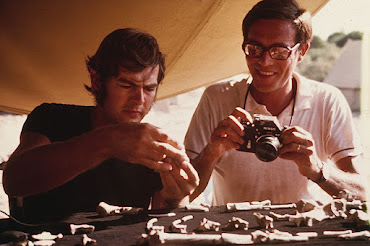
Donald Johanson and Maurice Taieb (with camera) in 1974, studying the bones of an Australopithecus afarensis specimen later named "Lucy".


Alice C. Linsley

Dr. Jeremy De Silva's research has shown that Australopithecus lacked the large grasping toe typical of tree climbers, and its spine, pelvis, knees, and ankles were made for walking on two legs and not designed for tree climbing.

A recent discovery of a complete fourth metatarsal of A. afarensis at Hadar shows the deep, flat base and tarsal facets that "imply that its midfoot had no ape-like midtarsal break. These features show that the A. afarensis foot was functionally like that of modern humans." (Carol Ward, William H. Kimbel, Donald C. Johanson, Feb. 2011) Read the report here.

Additionally, A. afarensis apparently used polished bone tools, had communal meals, and controlled fire. Some of the earliest evidence of controlled use of fire by humans was found at Swartkrans in South Africa. Other sites that indicate fire use include Chesowanja near Lake Baringo, Koobi Fora and Olorgesailie in Kenya.

A. Afarensis also had human dentition which is quite easily distinguished from that of apes. In humans, the back teeth are larger than the front teeth (not so with apes), and the canines are not pointed. Humans also lack the characteristic diastema or tooth gap found in apes.

Mary Leakey’s 1979 discoveries in Tanzania added to the evidence that humans walked the earth about over 3 million years ago. At Laetoli, about 25 miles south of Olduvai Gorge in Tanzania, Leakey discovered footprints of a man, woman and child created about 3.6 million years ago and preserved under falling ash from the nearby Sadiman volcano. The raised arch and rounded heel of the footprints showed that whoever left these footprints walked as humans today.

However, Donald C. Johanson (co-author of the Feb. 2011 report cited above) had already declared to the term Australopithecus meaning "ape of the south" or "southern ape". Mary Leakey might have objected. She later expressed her regret that “the Laetoli fellow is now doomed to be called Australopithecus afarensis.”

Johanson and Mary Leakey were scheduled to speak at a Nobel Symposium in Sweden in May 1978. The conference honored Mary Leakey, who received the Golden Linnaean Medal from the King of Sweden for her scientific investigations. Mary Leakey was embarrassed when Johanson announced the name - Australopithecus afarensis - for his Afar Triangle finds and included Mary Leakey's 4-million-year Laetoli specimen (jawbone LH4) from Tanzania as an exhibit.

Johanson, who was scheduled to speak before Mary Leakey, scooped her speech. She was upset because Johanson's designation of "ape" was at odds with what she believed to be the evidence. Johanson's label for Lucy and her community stuck though he clearly has doubts based on more recent discoveries as to the accuracy of the ape designation.

The designation of ape is contradicted by the evidence that these archaic humans had oppositional thumbs, short fingers, human dentition, walked upright, and controlled fire. Discoveries in Dikika, Ethiopia indicate that they used flints to scrap, saw, and chop. Two fossilized bones have been found that appear to be marked by stone tools. On the basis of low-power microscopic and environmental scanning electron microscope observations, these bones show unambiguous stone-tool cut marks for flesh removal and to access bone marrow.

The evidence suggests commensality: sharing a meal around a fire. That is a human practice, not one of apes.

Muscle reconstruction provides further evidence that Lucy walked as modern humans do. 

The evidence taken together indicates that Lucy and her community were human, though anatomically archaic humans. What do you think?


Related reading: Maurice Taieb, the Geologist who Discovered the Site Where Lucy was FoundGenesis and Genetics; Biblical Anthropologists Discuss Darwin; The Evolution of Darwinian Evolution; Getting the Facts About Human OriginsIs Genesis Really About Human Origins?


Wednesday, August 17, 2011

Facts About Human Origins


Alice C. Linsley

In conversations with students I have found that there is a great deal of confusion about the names and morphological features of the earliest human populations. In this essay, we will look at some of these finds to clarify the picture of early human populations.

The search to understand archaic humans was led astray by a fraud in England called the Piltdown man. This skull was the discovery of Charles Dawson in 1912. It had a large brain case similar to modern humans and an ape-like jaw. It was exposed as a fraud in the early 1950's. Because of Darwin's theory of apes and humans evolving from a common ancestor, people expected to find human ancestors with ape-human features.

Recent discoveries in South Africa and in Southern Siberia, along with molecular genetics, has provided a much more complex picture of human origins, but there is agreement that Africa is where the earliest humans lived.


                                             Date of Fossil
                                         (
years ago)


East Africa:
  Herto, Middle Awash160,000-154,000  
  Omo 1195,000
  Laetoli120,000

South Africa
:
  Border Cave115,000-90,000
  Klasies River Mouth90,000

Israel
:
  Skhul and Qafzeh92,000-90,000

Australia
:
  Lake Mungo60,000-46,000

Asia
:
  Annamite Mountains (Laos)63,000
  Ordos (Mongolia)40,000-20,000 ?
  Liujiang (China)139,000-111,000 ?
  Zhirendong (China)100,000 ?
  Zhoukoudian upper cave
     (China)
27,000

Europe
:
  Peştera cu Oase (Romania)  36,000-34,000
  Combe Capelle (France)35,000-30,000
  Mladeč and Předmostí
     (Czech Republic)
35,000-25,000
  Cro-Magnon (France)35,000-13,000


Cro-Magnon

Cro-Magnon was once used to refer to the population that lived alongside Neanderthals between 35,000 and 13,000 years ago (mid Holocene). The name 'Cro-Magnon' refers to a rock shelter near the Dordogne Valley of France where parts of five skeletons were discovered in 1868. Scientists compared these skeletons to Neanderthal skeletons found in similarly dated sites at Paviland, Wales and at Combe Capelle and Laugerie-Basse in France, and decided they were different from the Neanderthals. However, Cro-Magnon remains were very like modern humans.


Neanderthals

Homo neanderthalenis is the term coined in 1863 by Irish anatomist William Kin. This human population was named after the Neander Valley in Germany where the first specimen was discovered. These are the bones of the original Neandertal from the Neander Valley and they are within the range of modern human anatomy.

Photo: Michael Hess 
Source: Display, LVR-Landes Museum Bonn,Germany

Neanderthals represent a proto-modern European population. There is considerable archaeological evidence that Neanderthals and European populations coexisted in the Middle East as early as 80,000 years ago.


T   
The sequencing of the Neanderthal genome is almost complete and not surprisingly it reveals that Neanderthals and modern humans are virtually identical. Here's the report:

After years of anticipation, the Neanderthal genome has been sequenced. It’s not quite complete, but there’s enough for scientists to start comparing it with our own.

According to these first comparisons, humans and Neanderthals are practically identical at the protein level. Whatever our differences, they’re not in the composition of our building blocks.

However, even if the Neanderthal genome won’t show scientists what makes humans so special, there’s a consolation prize for the rest of us. Most people can likely trace some of their DNA to Neanderthals.

“The Neanderthals are not totally extinct. In some of us they live on a little bit,” said Max Planck Institute evolutionary geneticist Svante Pääbo.

It took four years for Pääbo’s team to assemble a working sequence from DNA in the bones of three 38,000-year-old Neanderthal women, found in Croatia’s Vindija Cave. The sequence, published May 6 in Science, covers about 60 percent of the entire genome. (Read the full report here.)


Australopithecus afarensis

The discovery of Australopithecines in South Africa beginning in 1924 showed that the early hominins had human bodies and brains of a size proportional to their bodies. The size of these archaic brains was small, but brain size does not preclude complexity of thought.

Australopithecus afarensis is the term coined by South African anatomist Donald C. Johanson. These 3.2 million year old remains were found in Hadar, Ethiopia in 1973. For about 20 years A. afarensis was described as the earliest known “human ancestor species.” Australopithecus means “Ape of the South” and afarensis refers to the Afar Triangle of Ethiopia where the fossils were found. The first discovered skeleton of this population was named "Lucy" and she was described as an ape rather than a human.  Only about 40 percent of her skeleton was recovered.

Lucy's skeleton

Since 1974, many more A. afarensis bones have been found in Africa, mainly in Cameroon, Ethiopia and Tanzania. All are at least 3 million years old. The bone structure reveals that these were not apes, but early humans. They walked upright (erect) and had human ankle bones.

When Jeremy DeSilva, a British anthropologist, compared the ankle joint, the tibia and the talus fossils of human ancestors ("hominins") between 4.12 million to 1.53 million years old, he discovered that all of the ankle joints resembled those of modern humans rather than those of apes. Chimpanzees flex their ankles 45 degrees from normal resting position. This makes it possible for apes to climb trees with great ease. While walking, humans flex their ankles a maximum of 20 degrees. The human ankle bones are quite distinct from those of apes. (Read about DeSilva’s research here.)

A recent discovery of a complete fourth metatarsal of A. afarensis at Hadar that shows the deep, flat base and tarsal facets that "imply that its midfoot had no ape-like midtarsal break. These features show that the A. afarensis foot was functionally like that of modern humans." (Carol Ward, William H. Kimbel, Donald C. Johanson, Feb. 2011) Read the report here.

Additionally, A. afarensis apparently used polished bone tools, shared food (which apes don’t do) and used fire. Some of the earliest evidence of controlled use of fire by humans was found at Swartkrans in South Africa. Other sites that indicate fire use include Chesowanja near Lake Baringo, Koobi Fora, and Olorgesailie in Kenya.

A. Afarensis also had human dentition which is quite easily distinguished from that of apes. In humans, the back teeth are larger than the front teeth (not so with apes), and the canines are not pointed. Humans also lack the characteristic diastema or tooth gap found in apes.

photo of the Laetoli footprints
Early hominin footprints
at Laetoli, Tanzania
Mary Leakey’s 1979 discoveries in Tanzania added to the evidence that humans walked the earth about over 3 million years ago. At Laetoli, about 25 miles south of Olduvai Gorge in Tanzania, Leakey discovered footprints of a man, woman and child created about 3.6 million years ago and preserved under falling ash from the nearby Sadiman volcano. The raised arch and rounded heel of the footprints showed that whoever left these footprints walked as humans today.

Unfortunately, Donald C. Johanson had already announced to the world that the Australopithecus afarensis were apes, though Mary Leakey would have classified her Laetoli finds as Homo/human. She expressed her regret that “the Laetoli fellow is now doomed to be called Australopithecus afarensis.”

Johanson and Mary Leakey were scheduled to speak at a Nobel Symposium in Sweden in May 1978. The conference honored Mary Leakey, who received a medal from the King of Sweden for her scientific investigations. Mary Leakey received the Golden Linnaean Medal, but also was very embarrassed when Johanson announced the new name - Australopithecus afarensis - for his Afar Triangle finds and included Mary Leakey's 4 million year old Laetoli specimen (jaw bone LH4) from Tanzania as an exhibit.

Johanson, who was scheduled to speak before Mary Leakey, scooped Mary's speech. She was angry that Johanson had named her discoveries, using a designation that was totally at odds with what she believed to be the evidence. Johanson's name stuck though he clearly has doubts based on more recent discoveries as to the accuracy of the ape designation.

The designation of the finds in Ethiopia as apes is contradicted by the evidence that these fossils had oppositional thumbs, short fingers, human dentition, and apparently built fires. Recent discoveries in Dikika, near Gona and Bouri, Ethiopia indicate that they shared their food, and used flints to scrap, saw and chop. Two fossilized bones have been found that appear to be marked by stone tools. On the basis of low-power microscopic and environmental scanning electron microscope observations, these bones show unambiguous stone-tool cut marks for flesh removal and to access bone marrow.


Johanson has said, “There is no question that the announcement of stone tool use at 3.4 million years ago will unleash a flurry of controversy and genuine disbelief among some scholars. However, I believe the team has presented a convincing case of stone tool use during Lucy's time. These unexpected results may well generate a new understanding of early hominid behavior and will prompt a reexamination of the tens of thousands of animal bones already collected from this time period at Hadar, Lucy's home, and other sites in Kenya and Tanzania.”

Dr. Curtis Marean of the Institute of Human Origins at Arizona State University said, "Most of the marks have features that indicate without doubt that they were inflicted by stone tools." He helped to identify the nature of the marks.


Denisovan Populations

Archaic humans dating to 400,000 years have been found in Southern Siberia and Northern Spain.

Archaic populations in Southern Africa are presently being studied by the Rising Star Expedition.


Conclusion

The earliest fossils that scientists agree to be fully human date to about 160,000 years and were found in desert sands near the Ethiopian village of Herto in 1997. These fossils show a range of anatomical features yet all the features are found among humans today. The nearly complete skulls of people who lived 160,000 years ago are, in the words of the American paleontologist Tim White, “like modern-day humans in almost every feature.”

Some of the Australopithecine fossils dating between 700,000 and 2.4 million years are recognized by scientists as early human fossils. Mary Leakey considered her 4 million year Tanzania finds to be Homo, not ape.

It is clear from this review of the data that the classification of fossils as ape or human has been revised several times because the criterion of classification of human and ape has not been consistently applied. It is also clear that scientists interpret evidence through their preconceptions and are prone to seek the limelight in order to gain funding to continue their work.

The evidence indicates that humans have been on the surface of the earth for millions of years and that a range of physical features from population to population has been the norm. Population specific features were likely enhanced because archaic people practiced endogamy (marriage within the clan). From 3 million years to the present, there was been a limited amount of physical changes in humans, but no change in the essence of humanity, and devotion to the theory of evolutionary branching of ape and human from a common ancestor simply is not supported by the data.

As to the theory of humans and apes having a common ancestor, this is not indicated by the genome research. See “Study Reports a Whopping ‘23% of Our Genome’ Contradicts Standard Human-Ape Evolutionary Phylogeny,” Evolution News, June 3, 2011.


Related reading: 1.5 Million Human Foot Prints in KenyaOrigins of the Dmanisi SkullGenesis and Genetics; Humans Originated in Africa; Where DNA Studies and Linguistics Contradict Evolutionary Theory; 90,000 Year African Projectiles; Was Lucy Human?